The EU AI Act's Human Oversight Delay, and the Gap It Leaves Open
Brussels pushed back the EU AI Act's human oversight deadline to December 2027. The rule it delayed was written for a different kind of AI.

The EU AI Act’s Human Oversight Delay, and the Gap It Leaves Open
The European Union just gave itself 16 more months to figure out how humans are supposed to supervise high-risk artificial intelligence. The deadline for the EU AI Act’s human oversight rules, originally set for August 2026, has been pushed to 2 December 2027. That sounds like a bureaucratic footnote. It isn’t. The rule being delayed was written to answer a specific question: when an AI system does something wrong, can a person actually see it happening and stop it? The delay buys regulators time. It does not buy back the months that autonomous AI agents, the software making decisions and taking actions with no person in the loop, have already spent shipping into production while the rulebook waited to catch up.
What the human oversight rule actually requires
The EU AI Act is the European Union’s flagship law regulating artificial intelligence, and its most consequential clause for anyone building or deploying AI is Article 14. It applies to what the law calls high-risk AI systems, tools used in contexts like hiring decisions, credit scoring, law enforcement, and critical infrastructure, where a bad output can materially harm someone. For these systems, Article 14 requires that a human be able to understand what the system is doing, monitor it while it runs, correctly interpret its output, and, if something goes wrong, override or stop it. Companies that build these systems have to design them so a person can actually do that. Companies that deploy them have to put a specific, trained person in charge of watching, an obligation spelled out alongside Article 14 in the law’s deployer duties.
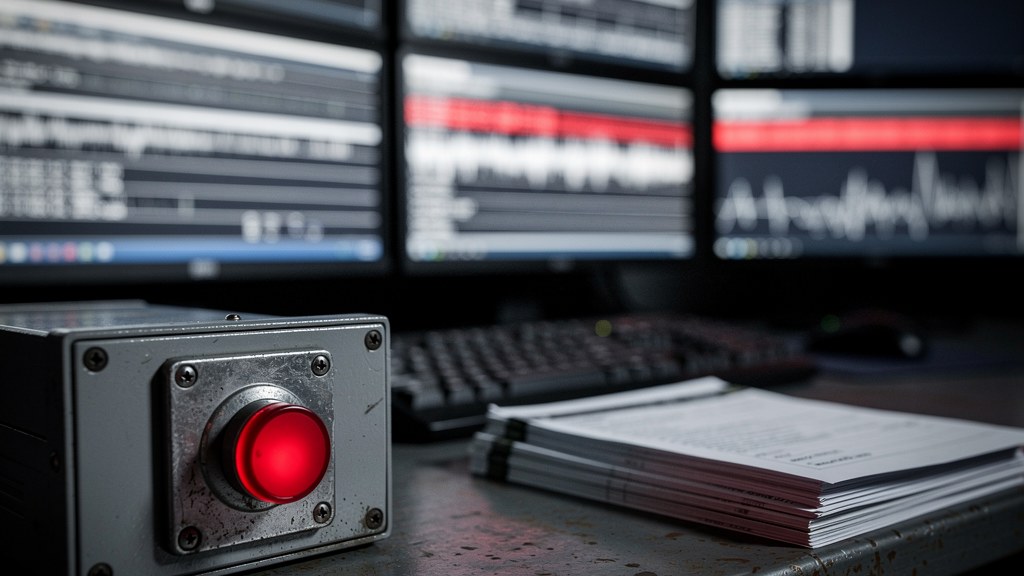
The plain-language version: somewhere between the AI and the consequence, there is supposed to be a human with their hand near a stop button, and that person has to be qualified enough to know when to press it.
Why the deadline moved
The systems this rule targets, so-called Annex III high-risk AI, a list of use cases the EU AI Act singles out for the strictest scrutiny, were due to come under full obligation on 2 August 2026. The European Commission proposed pushing that back in its Digital Omnibus on AI, published 19 November 2025, arguing that the technical standards, national regulators, and conformity-assessment bodies (the independent auditors meant to check a system against the rules before it goes live) simply weren’t ready. The Council and Parliament reached agreement in May 2026; Parliament gave its formal endorsement on 16 June 2026, and the Council signed off on 29 June 2026. The new date for Annex III systems is 2 December 2027. A related category, AI embedded inside regulated products like medical devices or cars, moves from August 2027 to 2 August 2028.
It’s worth being precise about what didn’t move. The EU AI Act’s rules for general-purpose AI models, the large foundation models like the ones behind popular chatbots, covering transparency about training data, copyright, and extra scrutiny for the most powerful systems, have applied since 2 August 2025 and are untouched by this delay. Only the high-risk, human-oversight track shifted. Treating “the AI Act” as one single deadline is the first mistake to avoid here; it’s several tracks moving at different speeds.
The official reasoning is bureaucratic and, on its own terms, reasonable: you can’t hold companies to a standard that no accredited body exists yet to check them against. But regulatory readiness and the pace of the technology being regulated are two different clocks, and only one of them slowed down.
The gap the delay didn’t touch
Here is the part the calendar change can’t fix. Article 14 was drafted with a certain picture of AI in mind: a system produces one output, a résumé is ranked, a loan application is scored, a face is flagged, and a human reviews that single output before anything happens. That model of oversight, one decision, one look, one veto, still works reasonably well for the AI most people picture when they hear the term.
It does not describe an autonomous AI agent: software that doesn’t just produce a recommendation but chains together a sequence of actions on its own, placing trades, sending payments, filing documents, adjusting infrastructure, at a speed and volume no person is watching in real time. If you want a deeper look at how organizations are trying to catch these systems technically before governance catches up, OWASP, MITRE, and NIST each maintain frameworks built specifically for securing AI systems, and knowing which one to reach for first is its own useful question.
A structural critique published in Tech Policy Press by researchers Kathrin Gardhouse and Amin Oueslati, both AI governance researchers at The Future Society, lays out why the “stop button” model breaks down for agents specifically. Their argument, made in their own names rather than as an anonymous industry complaint, is that once an agent has already placed the trade, sent the payment, or filed the legal submission, there is frequently no defined safe state to roll back to. You can’t un-send a wire transfer. Effective oversight of a system acting at that speed, they argue, requires purpose-built technical infrastructure, automated anomaly detection, and continuous logging capable of catching an action before it becomes irreversible, not a human being trusted to notice in time. The Act’s text, as written, mandates the human role but not the infrastructure that would make that role possible to actually perform.

That’s the governance gap. It isn’t a missing deadline. It’s a rule built around reviewing outputs being asked to supervise a system that acts continuously. Pushing the date to December 2027 doesn’t change what oversight is supposed to mean once it arrives; it just changes when someone has to start proving they’ve built it.
Who is actually on the hook right now
For a company deploying one of these systems today, the practical reality is that the legal deadline moved, but the operational problem didn’t wait for it. If a company’s AI agent takes an irreversible action, a wrong payment, a wrongful account suspension, a bad automated decision that immediately affects someone, the question of who is accountable doesn’t hinge on whether Article 14 has technically kicked in yet. Existing consumer protection, contract, and liability law in most jurisdictions already asks who deployed the system and what supervision they claim to have had in place. A 2027 compliance deadline for the AI Act’s specific oversight clause doesn’t erase that exposure; it just means the AI Act itself isn’t yet the mechanism forcing the answer.
Some organizations reading the delay as license to slow down their own internal work on this are, in effect, betting that the underlying legal exposure moves in lockstep with the regulatory calendar. It doesn’t. The technology that the rule was meant to catch keeps shipping regardless of when enforcement begins.
What this means if you’re not a lawyer or a regulator
For the average reader, the useful thing to take from all this isn’t the exact date, 2 December 2027 will likely shift again before it arrives, entire regulatory regimes rarely land on schedule the first time. The useful thing is the shape of the problem underneath the date. An oversight rule built around a person reviewing one decision at a time cannot, by design, supervise a system making dozens of decisions per minute. That’s true whether the enforcement deadline is next year or three years out. It’s true for the EU AI Act specifically, and it will be true for whatever oversight rules other jurisdictions eventually write for the same kind of software.
If you interact with services that use AI agents, financial platforms doing automated decisioning, hiring tools screening applicants, customer service systems empowered to actually resolve issues rather than just chat, the question worth asking isn’t whether that company is “AI Act compliant.” It’s simpler and more concrete: is there a person who could plausibly have caught it before the action became irreversible, or is the oversight a formality that exists on paper but not in the pipeline?

FAQ
What is the EU AI Act’s human oversight rule?
Article 14 of the law requires that high-risk AI systems, those used in areas like hiring, credit scoring, or law enforcement, be designed so a qualified person can monitor them, understand their output, and stop or override them if something goes wrong. It applies to the companies that build these systems and the organizations that deploy them.
When does the human oversight deadline now apply?
The deadline for high-risk AI systems under Annex III, the law’s list of high-risk use cases, was pushed from 2 August 2026 to 2 December 2027, following the European Commission’s Digital Omnibus on AI proposal and formal approval by the Council and Parliament in mid-2026. A related category covering AI embedded in regulated products moves to 2 August 2028.
Does the delay affect ChatGPT-style AI models too?
The delay does not touch ChatGPT-style AI models. Rules for general-purpose AI models, the large foundation models behind mainstream chatbots, covering transparency, copyright, and scrutiny of the most powerful systems, have applied since 2 August 2025 and were not part of this delay. Only the high-risk, human-oversight track for Annex III systems moved.
Why do experts say the oversight rule doesn’t fit AI agents?
Researchers Kathrin Gardhouse and Amin Oueslati, writing in Tech Policy Press, argue that Article 14 assumes a human reviews one AI output before anything happens, but autonomous AI agents chain multiple actions together at high speed, often with no clear point to roll back to once an action, like a payment or filing, has already occurred.
Who is responsible if an AI agent takes a harmful action before the new deadline?
Existing liability, contract, and consumer protection law in most jurisdictions already applies to companies deploying AI agents, regardless of when the specific human oversight deadline takes effect. The 2027 date changes when this particular law becomes the enforcement mechanism; it does not remove accountability for harm caused in the meantime.
The takeaway
A compliance deadline can be moved with a vote. The pace of the software it’s meant to govern can’t be moved by the same vote, and closing that gap will take more than a new date on a regulation, it will take oversight built for systems that act continuously rather than ones that simply answer a question and wait.