Kimi K3 vs Claude Fable 5 for Coding: What a Direct Test Actually Shows
Kimi K3 costs a fraction of Claude Fable 5 and beats it on some coding benchmarks. A hands-on build test shows where that price gap actually shows up.

Claude Fable 5 costs more than three times what Kimi K3 charges for the same million tokens, and on at least one independent coding leaderboard, the cheaper model currently ranks first. That is not the same as saying Kimi K3 is simply better. It means the two models are worth comparing on the same task before assuming the pricier one wins by default.
Kimi K3, released July 16, 2026 by the Chinese lab Moonshot AI, and Claude Fable 5, Anthropic’s flagship model, sit at opposite ends of how an AI company can choose to build and sell a model. One publishes its size and lets developers eventually download it. The other keeps its internals private and sells access only. What each choice costs you, in money and in what you get for it, is the actual question worth answering.
What each model actually is
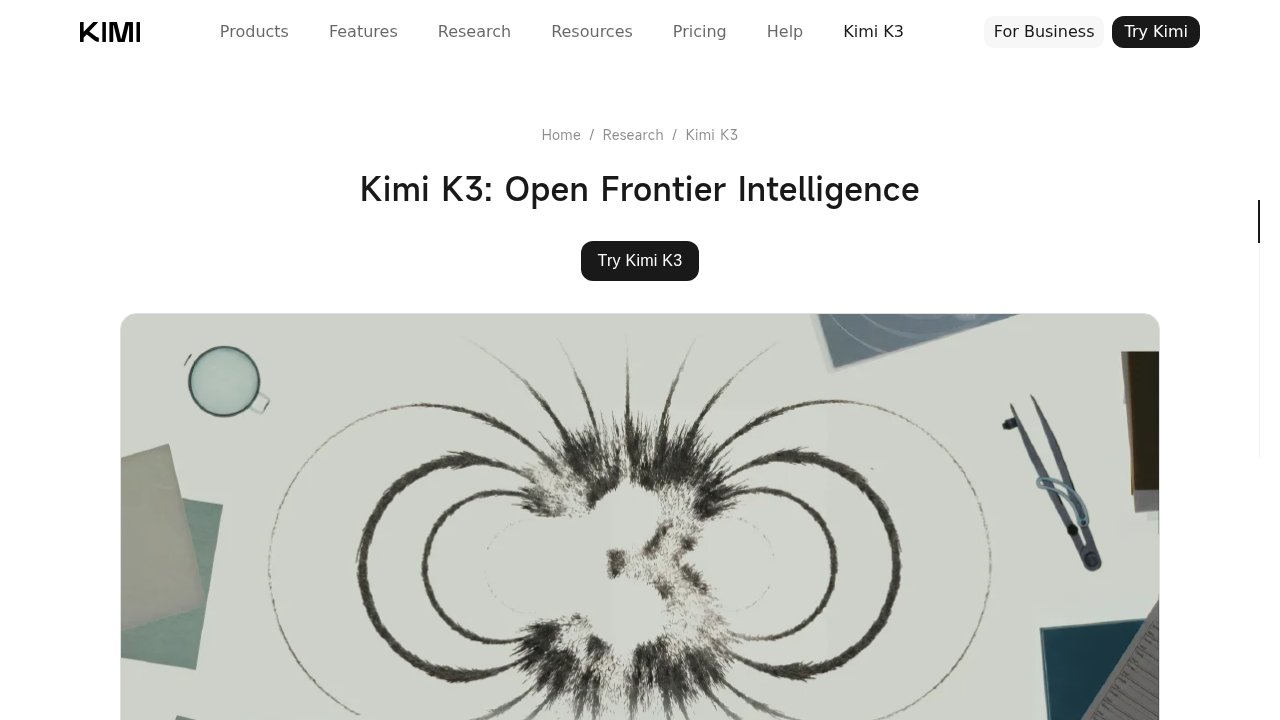
Kimi K3 is a mixture-of-experts model with 2.8 trillion parameters, the internal values a model learns during training, though only 16 of its 896 specialized components activate for any single word it generates, which keeps a model this large fast enough to use. It holds a million tokens of context, reads images natively, and its full weights, the trained parameters other developers can download and run themselves, are due to be published by July 27, 2026, making it open-weight rather than open source, a distinction that matters more than the parameter count. Until then it is reachable through Moonshot’s own chat app, its Kimi Code coding tool, and a paid API.
 Source: kimi.com/blog/kimi-k3
Claude Fable 5 keeps its weights closed. Anthropic has never published a parameter count for it, so any specific number floating online is a guess, not a fact. It matches Kimi K3’s million-token context but caps a single response at 128,000 tokens, and its reasoning process, the step-by-step working the model does before answering, runs on every request and cannot be switched off. Kimi K3 currently has the same limitation from the other direction: it launched running only its highest-effort reasoning setting, and cheaper, faster modes are only beginning to roll out, unevenly, across its tools.
The price gap, in real numbers
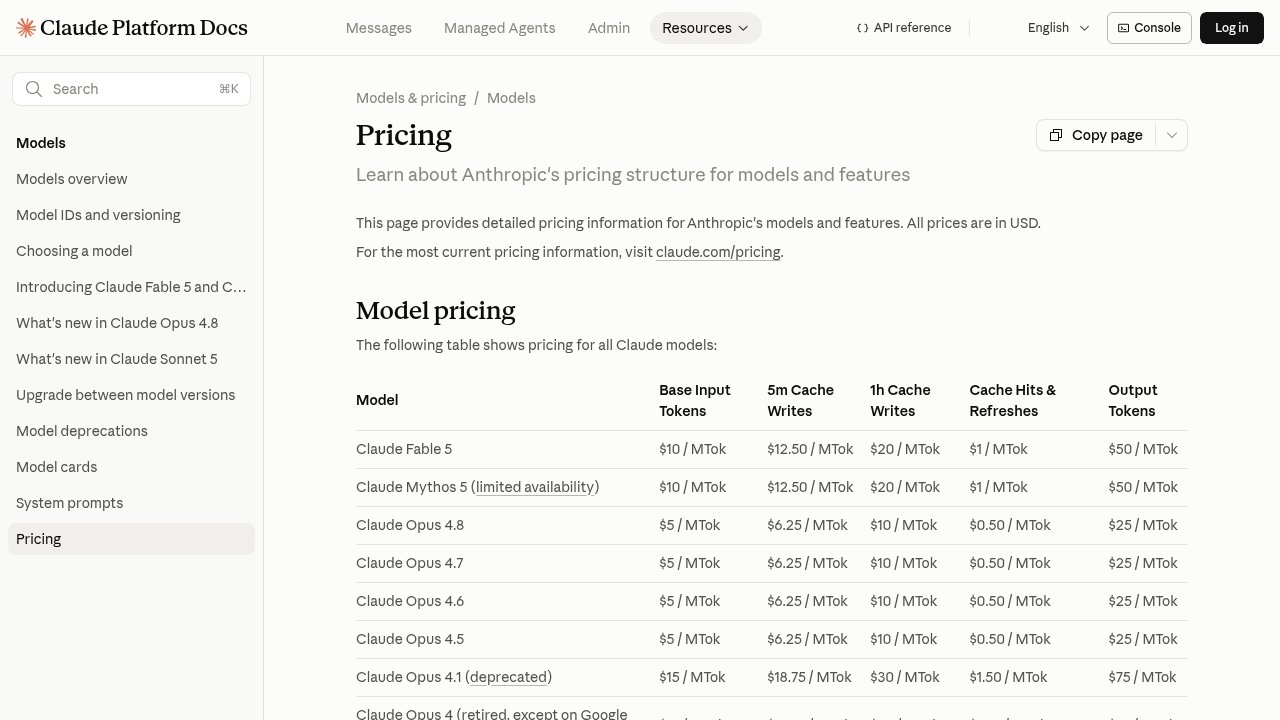
Moonshot’s official API pricing for Kimi K3 is $0.30 per million tokens for a cached prompt, one the model has already processed and can answer from memory, $3 per million for a new one, and $15 per million tokens generated. Anthropic charges $10 per million input tokens and $50 per million output tokens for Claude Fable 5. On generated output, the part that usually costs the most on a real coding task, Fable 5 runs more than three times the price of Kimi K3.
 Source: docs.claude.com
Moonshot also sells Kimi Code, its own coding tool, on a flat monthly plan starting around $19, an alternative to per-token billing for anyone who would rather budget a fixed amount than watch a running total. On one long, complex build run on that entry plan, usage tracking showed roughly 15 percent of the available context window used, 12 percent of a rolling five-hour usage limit, and 2 percent of the weekly cap, for a session that took over an hour to finish. That is a wide margin before the flat fee starts to feel tight, though limits like these are set by the vendor and can change without much notice, so they are worth checking against current terms before betting a workflow on them.
A direct build test
One test published shortly after Kimi K3’s release put Fable 5, Kimi K3, and a third open Chinese model, GLM 5.2, on the exact same prompt: a single self-contained web page simulating a concrete plant’s daily operations, trucks, batching, deliveries, and a required self-check tab where the model had to run its own assertions to prove the simulation actually worked, not just looked finished.
All three models produced a working result. GLM 5.2’s version needed a page reload before its animation would run. Fable 5’s was the most visually polished of the three, with every self-check passing cleanly. Kimi K3’s version went further, with a richer live visualization and a more detailed self-verification tab than either of the other two, including logic the prompt never explicitly asked for. None of that settles which model is better in general. It shows that on one demanding, realistic build task, the far cheaper model held up against the far pricier one, not just matched it on a shortcut.
That result lines up with a broader, independent signal: on a coding-specific leaderboard where people judge two anonymous AI answers head to head without knowing which model wrote which, Kimi K3 currently ranks first, ahead of Fable 5, a jump of 17 places from Moonshot’s previous model in a matter of months.
Where Kimi K3 still falls short
Moonshot’s own launch notes are unusually candid about where the gap remains: on deeper reasoning benchmarks, both Fable 5 and OpenAI’s GPT 5.6 Sol stay ahead of Kimi K3. A model that wins a coding showdown is not automatically the stronger choice for a task that leans on long, careful reasoning rather than producing working code fast.
There is a second, more technical catch. Because Kimi K3 still defaults to its highest reasoning effort in most of its tools, and because Moonshot trained it expecting its full internal reasoning history to be fed back into every step, the model can behave unpredictably inside a coding tool that does not preserve that history properly. Fable 5’s reasoning is always on by design, which is a different trade-off: predictable but never optional, and priced accordingly.
There is also a plainer cost: Kimi K3 tends to answer more slowly than Fable 5 in everyday use, and its habit of double-checking its own work can stretch that further. On at least one demanding build, that checking loop ran long enough that the task never actually finished. Latency like that is worth timing against your own workflow, not assumed from the price tag alone.
Which one to pick
For a team building coding tools or agent workflows where cost scales with usage, a fast-moving prototype, a coding agent that runs hundreds of requests a day, a startup watching its API bill, Kimi K3 is worth testing first. It wins several coding-specific benchmarks outright, ranks ahead of Fable 5 on an independent coding leaderboard, and costs a fraction of the price per token, so the same budget buys several times the usage, provided response time is not the bottleneck.
For work that leans on deep, multi-step reasoning rather than generating code quickly, a large refactor across an unfamiliar codebase, a task where a wrong answer is expensive to catch later, Fable 5 remains the steadier choice, at a price that reflects it. The same holds if the tool running the model does not yet properly support the full reasoning history Kimi K3 currently expects: an unpredictable answer from a cheaper model is not actually cheaper once someone has to catch and fix it.
Neither model is the universal answer. The honest verdict is that price now buys a competitive coding model, not a compromise one, which was not reliably true a year ago, and that alone is worth testing against your own workload before renewing a subscription on habit.
FAQ
Is Kimi K3 cheaper than Claude Fable 5?
Yes, substantially. Moonshot’s official pricing is $15 per million output tokens against Anthropic’s $50 for Fable 5, and Kimi K3’s input pricing is even further apart once cached prompts are involved.
Does Kimi K3 beat Claude Fable 5 at coding?
On several published benchmarks and on an independent, human-judged coding leaderboard, yes. On deeper reasoning tasks, Moonshot’s own numbers put Fable 5 ahead. Which model wins depends on what the task actually demands.
Can I use Kimi K3 without paying per token?
Yes. Moonshot sells its Kimi Code tool on a flat monthly plan starting around $19, separate from the per-token API pricing used for direct integrations.
Is Claude Fable 5’s reasoning mode a disadvantage?
It is a trade-off, not a flaw. Fable 5’s reasoning always runs, which costs more per request but keeps its behavior predictable. Kimi K3 currently has the same always-on limitation in the other direction: it launched with only its highest-effort mode, and cheaper options are only starting to roll out, unevenly, across its tools.
Should I switch my whole workflow from Claude to Kimi K3?
Not on price alone. Test both against your actual task first, particularly anything that leans on long reasoning chains rather than producing code quickly, since that is where Moonshot’s own benchmarks still favor Fable 5.
Kimi K3 does not replace Claude Fable 5 outright, and Moonshot’s own numbers say as much. What it does is remove the assumption that the more expensive model automatically wins a coding task. That assumption was reasonable a year ago. Testing it against your own workload, rather than a leaderboard, is the only way to know if it still holds.
Photo: cottonbro studio / Pexels