Citrix NetScaler Zero-Day: Why Admins Had to Act Before a Patch Existed
How a 24-hour gap between a researcher's warning and Citrix's official fix left admins deciding whether to shut down NetScaler gateways on trust alone.
For about 24 hours in late September 2026, network administrators running Citrix NetScaler had to make a decision with no good options: pull a production system offline on the strength of a researcher’s warning, or keep it running and hope the warning was wrong. There was no official confirmation yet, and no fix to apply even if they wanted one. That gap, not the vulnerability itself, is the part of this story worth understanding, because it will happen again with some other product, and the same choice will land on someone else’s desk.
Two critical flaws, and Citrix’s own confirmation that they were being used
The product at the center of this is NetScaler ADC and NetScaler Gateway, Citrix’s line of appliances that sit at the edge of a company’s network. NetScaler ADC distributes and manages traffic to internal applications; NetScaler Gateway is the part most employees actually touch, since it is the enterprise VPN that lets remote staff log into company systems. Large organizations, including banks and government agencies, depend on it as the front door to their internal network. The dilemma this episode created is a close cousin of the one behind zero-trust network design, which assumes any single gateway or device can be compromised and limits what that compromise can reach.
On 2026-09-27, Citrix published a security bulletin, CTX697096, disclosing eight vulnerabilities at once. A CVE, or Common Vulnerabilities and Exposures identifier, is simply the public catalog number assigned to a specific flaw so researchers, vendors and defenders can all refer to the same bug without ambiguity. Of the eight, two stood out: CVE-2026-88771 and CVE-2026-88772, both carrying a CVSS score of 9.5. CVSS is the 0-to-10 severity scale the security industry uses to rank how bad a flaw is; anything above 9 is considered close to the worst case, meaning an attacker needs little skill or access to cause serious damage.
Both flaws allow remote code execution (RCE), which means an attacker can run their own commands on the appliance from outside the network. For CVE-2026-88771, Citrix describes the attacker as unauthenticated, so no password is needed. CVE-2026-88771 comes from improper validation of user input and affects every NetScaler deployment running a vulnerable version by default. CVE-2026-88772 is a memory overflow bug that can also crash the appliance (a denial of service) rather than just hijack it, but only triggers on systems using DTLS, a transport protocol enabled by default on NetScaler’s VPN virtual servers to speed up encrypted connections. Citrix’s bulletin stated plainly: “Exploits of CVE-2026-88771 and CVE-2026-88772 on unmitigated NetScaler deployments have been observed,” confirming these were not theoretical risks but flaws already being used against real systems.
The affected versions were NetScaler ADC and Gateway 14.1 before build 14.1-73.37, and 13.1 before build 13.1-64.23, along with the government-grade FIPS and NDcPP variants of those branches. Citrix shipped fixed builds in those same version branches on the same day the bulletin went public. This is worth being precise about: by the time most people read about this vulnerability, it was already patched. The interesting part of the story is what happened in the day before that.
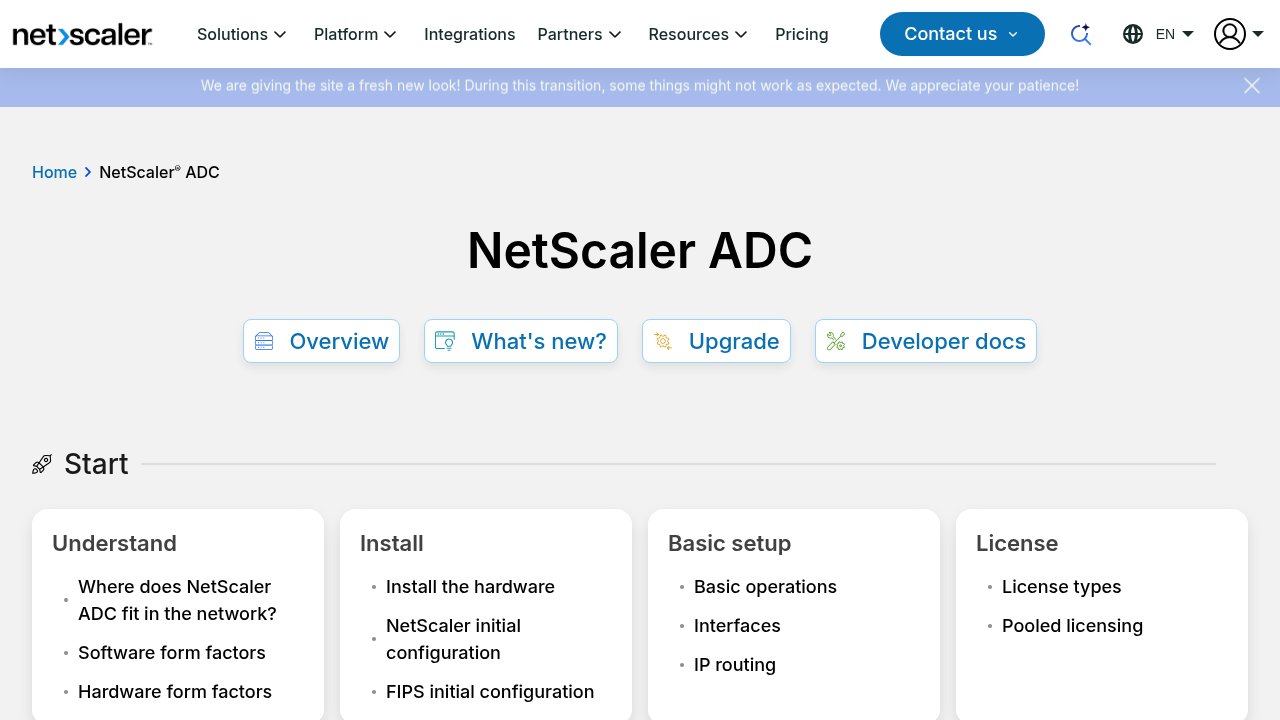
NetScaler ADC — the Citrix appliance line that distributes and manages traffic to internal applications, one of the two components affected by the flaws.
A warning arrived a full day before Citrix said anything
The sequence of events is the actual story here, and it ran backwards from how disclosure is supposed to work. Normally a vendor identifies or confirms a flaw, assigns it a CVE, and publishes a fix, all before the public conversation starts. This time, the public conversation started first.
On 2026-09-26, the security research firm watchTowr publicly warned that it had found active exploitation of unpatched remote-code-execution flaws in NetScaler ADC and Gateway (its public FAQ followed on 2026-09-27). watchTowr said it reached this conclusion through forensic investigation under what it calls its Rapid Reaction capability, essentially digging through compromised systems to work out how attackers were getting in, rather than through any advance information from Citrix. At that point, there was no official CVE number, no public bulletin, and no patch.
Separately, and before Citrix said anything in public, the Dutch national cybersecurity authority, NCSC-NL (a national CERT, or Computer Emergency Response Team, the government body each country typically runs to coordinate responses to major cyber incidents) sent a private pre-notification, after which, according to watchTowr, administrators were told by their suppliers and security teams to shut their NetScaler appliances down. This detail, reported by watchTowr, is the crux of the whole episode. A national-level authority’s private pre-notification was serious enough to trigger shutdown advice among select recipients, ahead of any public vendor statement, while the rest of the world had no visibility into it at all.
Citrix’s own bulletin followed the next day, 2026-09-27, with the CVE numbers, the confirmation of active exploitation, and the patched builds all arriving together. So the full timeline ran: credible but unofficial warning, then a private government notification to a limited circle, then roughly a day of uncertainty for everyone outside that circle, then an official confirmation and fix. For organizations already built around zero-trust assumptions, where no device or user is trusted by default regardless of network location, this kind of gap is exactly the scenario that approach is meant to blunt, since a compromised gateway alone should not translate into free movement across the rest of the network.
The dilemma for anyone outside the private warning loop
If you ran NetScaler and were not one of the organizations that received the private pre-notification linked to NCSC-NL, 2026-09-26 presented an uncomfortable choice. A respected research firm was reporting active attacks against your specific product, in public, with no vendor confirmation and no patch to apply. The appliance in question is usually the one thing standing between remote employees and internal systems, so shutting it down is not a minor inconvenience. It can mean an entire remote workforce, sometimes thousands of people, losing access to email, internal tools and files for as long as the appliance stays dark.
Shutting it down on an unconfirmed report costs you immediately and visibly: lost productivity, help-desk tickets, a hard conversation with leadership about why the VPN is down with no vendor statement to point to. Leaving it running costs you only if the report turns out to be true, and you cannot know that in the moment. This is the actual substance of the story: the decision to cut access has to be made under uncertainty, before the vendor has said a word, because waiting for certainty means waiting for the attackers to have already had a full extra day of free access. watchTowr’s own FAQ framed the situation for exactly this reason, arguing that the gap between credible evidence of exploitation and official vendor confirmation is where defenders are most exposed, since the one group with the authority to tell everyone what to do is also, structurally, usually the last to speak.
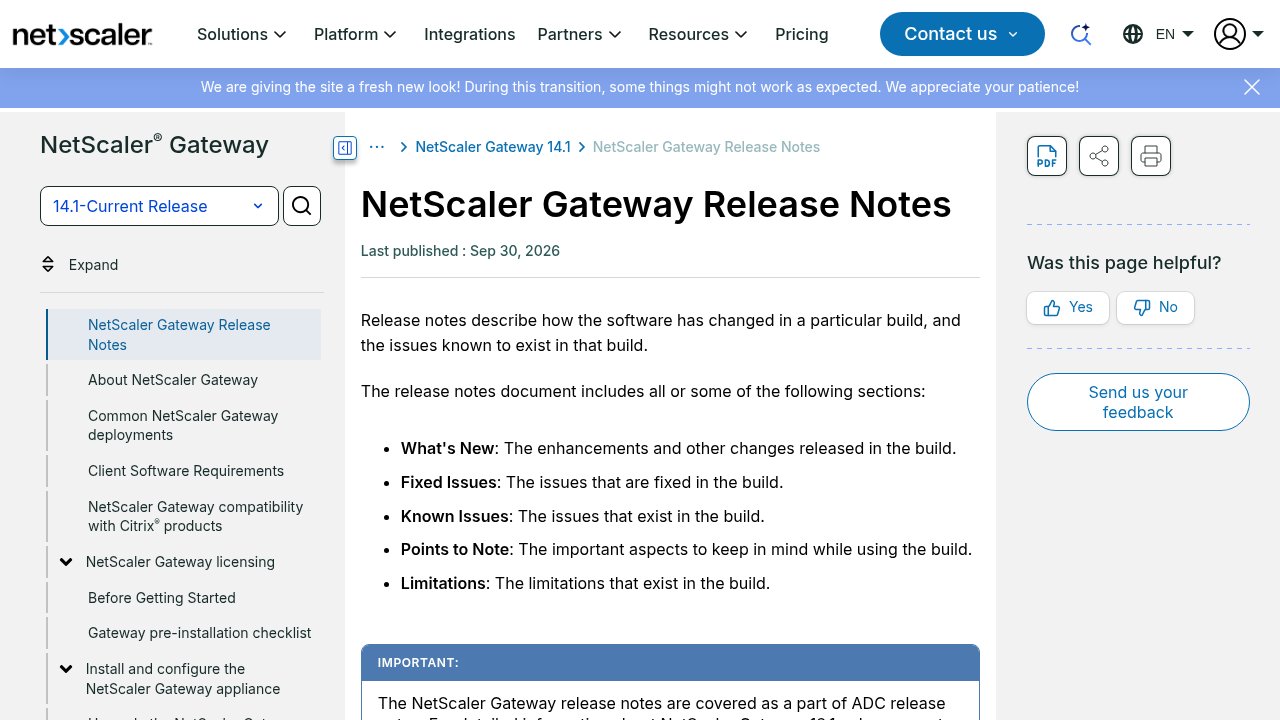
NetScaler Gateway — the enterprise VPN component that sits at the network edge and that most employees actually touch when connecting remotely.
What this means if you run NetScaler, or anything like it
For anyone still running an unpatched NetScaler ADC or Gateway today, the instruction is simple: update to 14.1-73.37 or 13.1-64.23 (or the matching FIPS/NDcPP build) immediately, since Citrix’s bulletin lists no workaround for either flaw other than upgrading. Out of the eight vulnerabilities in the same bulletin, only one (CVE-2026-88778, a separate and less severe flaw related to predicting TCP sequence numbers) has a documented configuration change that reduces risk without patching. For the two actively exploited flaws, the bulletin documents none.
According to reporting that cross-references watchTowr’s findings with Citrix’s own bulletin, the US Cybersecurity and Infrastructure Security Agency (CISA) added both CVE-2026-88771 and CVE-2026-88772 to its Known Exploited Vulnerabilities catalog, known as the KEV, on 2026-09-27, with a remediation deadline of 2026-09-30 for US federal agencies. The KEV list exists to flag flaws that are not just theoretically dangerous but are confirmed to be actively used in real attacks, which is a stronger signal than a CVSS score alone. The federal deadline itself does not apply outside US government agencies, but the KEV listing is still a useful shortcut for any organization deciding how to prioritize patching across dozens of outstanding advisories: if a flaw made the KEV, treat it as already being exploited against someone, not as a hypothetical risk.
For security teams, the broader lesson sits one level above this specific appliance. Supply-chain and infrastructure incidents increasingly surface this same pattern: a credible outside signal arrives before the vendor’s official word, and the delay between the two is where the real exposure lives. Having a plan for what to do with a serious but unconfirmed warning, before you ever need one, matters more than any single patch cycle.
Frequently asked questions
What is Citrix NetScaler used for?
Citrix NetScaler is a product line that includes NetScaler ADC, which manages and distributes network traffic to a company’s applications, and NetScaler Gateway, which functions as the company’s enterprise VPN for remote employees. Both sit at the edge of the network, making them a high-value target: a flaw there can expose everything behind it.
Is the Citrix NetScaler zero-day still a threat right now?
No. Citrix shipped fixed builds (14.1-73.37 and 13.1-64.23, plus FIPS/NDcPP variants) on 2026-09-27, the same day it confirmed active exploitation. Any NetScaler ADC or Gateway appliance updated to those builds or later is no longer exposed to CVE-2026-88771 or CVE-2026-88772. Unpatched systems remain at serious risk.
Why did a researcher report this before Citrix did?
watchTowr said it identified active exploitation through its own forensic investigation of compromised systems, separate from any information Citrix had shared. Public research firms routinely find and report exploitation independently of the vendor, which is why their warnings can arrive before an official vendor bulletin, CVE number, or patch exists.
Is this the same as the 2023 Citrix Bleed vulnerability?
No. Citrix Bleed was a different flaw, tracked under separate CVE numbers, disclosed in 2023. CVE-2026-88771 and CVE-2026-88772 are distinct vulnerabilities disclosed three years later, in a different NetScaler codebase state, with no technical relationship to the earlier incident beyond affecting the same product line.
What should I do if I still run an older NetScaler build?
Update immediately to NetScaler ADC/Gateway 14.1-73.37, 13.1-64.23, or the corresponding FIPS/NDcPP build, since the bulletin documents no configuration-based workaround for either actively exploited flaw. After patching, review appliance logs for signs of prior compromise, since Citrix’s bulletin confirms exploitation occurred against unpatched systems before the fix shipped.