Stack Overflow Rebuilt Its Product Before It Rebuilt Its Brand
Stack Overflow's new logo arrived months after the product did. What changed first, why, and what it means if you still ask questions there.
Stack Overflow spent the first months of 2026 changing what happens when a developer visits the site. It let people post looser, more open questions instead of forcing a strict format. It built an AI assistant into the page. It opened a direct channel so AI coding tools can query its archive instead of a person searching and pasting an answer by hand. The company had also been rebuilding its visual identity, with input from its own community since 2025. That rebrand, a new logo, a new typeface, a new tagline, only reached wide design-press coverage months later, in the middle of 2026. The product change that came first, the one that actually altered how the site works, got far less attention.
None of it happened for its own sake. Stack Overflow had spent three years watching its core activity disappear.
What changed on Stack Overflow between February and April 2026
Stack Overflow’s core activity is the question. A developer posts code that fails, someone explains why, and the answer stays online for the next person who hits the same error. That activity has been shrinking for years. Stack Overflow’s own public query tool, the Data Explorer, shows the platform peaked at roughly 200,000 questions a month back in 2014. The drop accelerated after ChatGPT launched in November 2022, and independent trackers, including longtime Stack Overflow contributor Theodore R. Smith, have charted the same decline since. By the first days of January 2026, that same public tool showed roughly 300 questions posted in five days, a pace of only about 2,000 for the entire month against a 200,000-a-month peak.
Between February 24 and April 2026, Stack Overflow rolled out a redesign built around that problem. The company staged it in three steps: a soft beta on February 24, a wider beta through March, and a full rollout in April, with a temporary option to switch back to the old site. Each change targeted a reason fewer people were asking in the first place. Open Questions loosened the platform’s famously strict formatting rules, letting someone post something closer to how they would type it into a chat window. AI Assist put an AI tool directly on the page, to help draft a question or a first-pass answer. And an MCP server, a connector that lets AI coding assistants such as Claude or GitHub Copilot pull from Stack Overflow’s archive directly instead of a developer searching and pasting the answer by hand, gave the site a role inside tools developers were already using, instead of only competing with them.
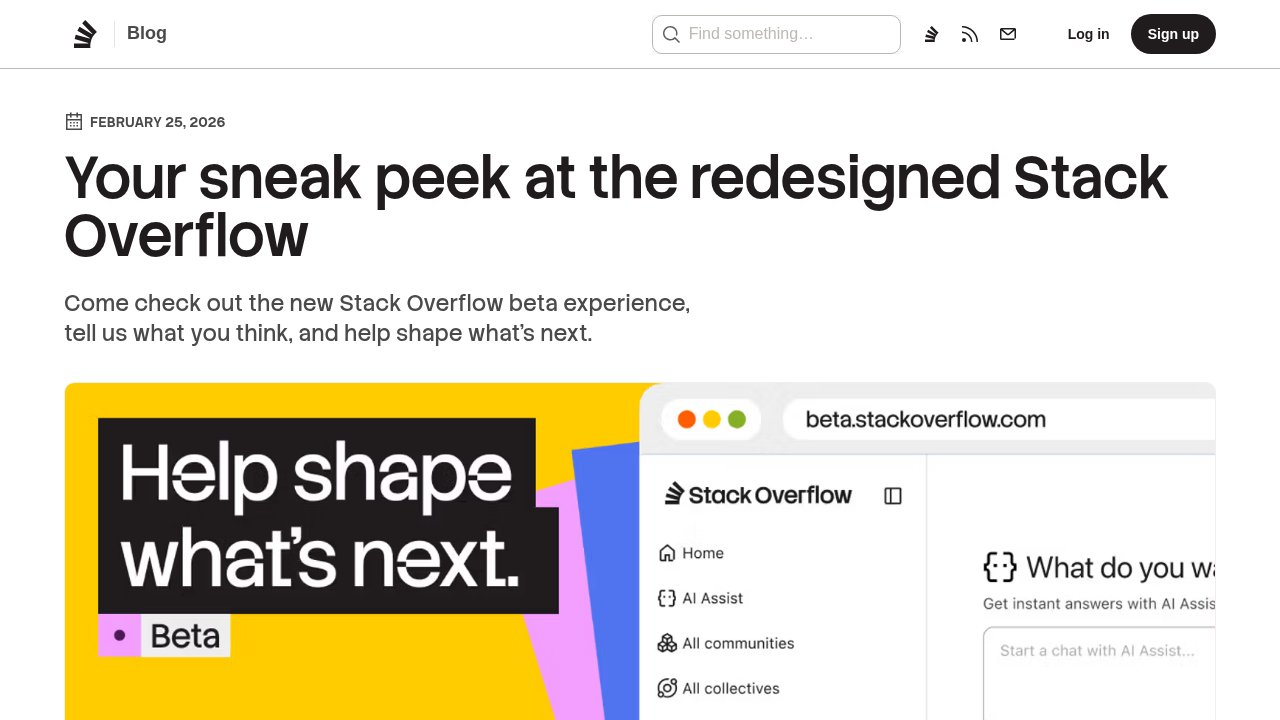 Stack Overflow’s own announcement of the beta, published February 25, 2026.
None of that fixed the traffic numbers by itself. But it set up what came next: a business built on the one thing those tools do not have on their own.
Where the archive goes now: Stack Data Licensing
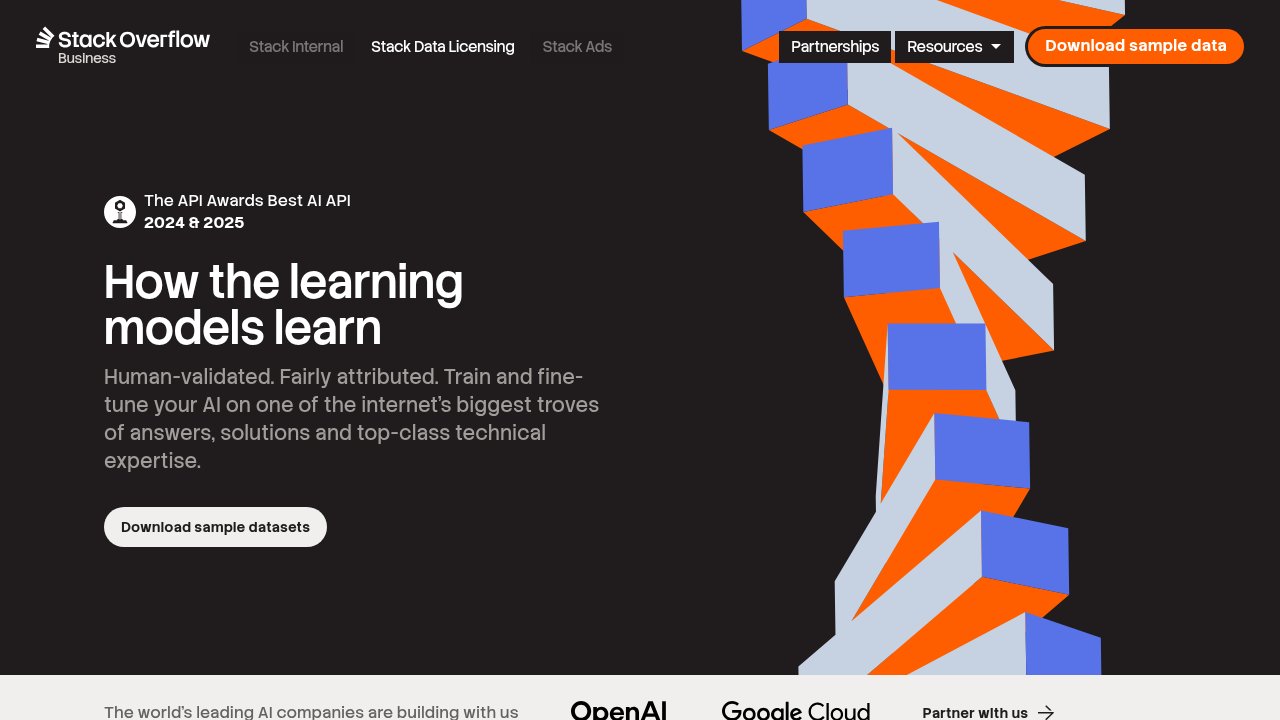
Stack Overflow’s answer to a shrinking audience of humans was to sell what those humans had already written. Stack Data Licensing is Stack Overflow’s product for AI companies: access to more than 83 million questions and answers, moderated and voted on by the community over 17 years, packaged for training or grounding an AI model. The company’s own pitch is blunt about why that archive still has value even as fewer people add to it: the answers were checked by real programmers and attributed to a real person, already filtered of the duplicates and errors that a model trained on raw internet text has to guess around.
OpenAI and Google Cloud are both named customers of the program, alongside smaller AI companies buying narrower slices of the dataset. Stack Overflow has published its own numbers for why that matters to a buyer: training GPT-4o on its data pushed the model’s answers 21 percentage points closer to what Stack Overflow calls a “perfect” score, and a similar setup lifted a Code Llama model’s accuracy on a coding-lookup task from about 37 percent to about 55 percent. Those figures come from Stack Overflow itself, so they double as a sales pitch, but the logic holds either way: an AI company gets a better product by paying for answers a human already checked, instead of scraping unverified ones for free.
For AI companies that will not sign a licensing deal, Stack Overflow built a second door. Since February 2026, it has used Cloudflare’s pay-per-crawl system against bots that try to copy its pages without an agreement: an AI crawler that shows up uninvited gets a “payment required” response instead of the page. Licensing deals for the companies that negotiate, a toll for the ones that do not. Either way, the archive stopped being free to take.
What it means if you still ask questions there
For a developer who still uses Stack Overflow day to day, the visible change is smaller than the strategy behind it. Post a question today and AI Assist can draft a first answer, still checked and edited by a human the way answers always were. A separate system, one most people never open directly, quietly makes that same question part of an archive sold to companies that never asked the person who wrote it.
That reuse is not new. Community content on most large platforms, from forums to social networks, has always fed the business of the company hosting it, and Stack Overflow’s own terms have allowed this for years. What changed is that the reuse now has a name, a sales page, and named customers, instead of sitting as background fact. Anthropic showed the opposite kind of change this year, pulling two of its own AI models offline worldwide within about ninety minutes on a government order (see “Anthropic switched off its most powerful AI overnight”). Different mechanism, same pattern: the platforms developers build habits around can change the terms underneath them, usually without much warning.
Stack Overflow’s new visual identity, built with the branding studio Koto around a custom typeface released free on Google Fonts and the tagline “Always in Build,” had been in the works with community input since 2025. It reached wide design-press coverage only around the middle of 2026, months after the functional changes had already shipped. None of that visual work is what changed for a developer using the site day to day. The product changed in February, and the business model changed with it.
The one idea to take away
Stack Overflow spent early 2026 turning its shrinking pool of human questions into an asset it could sell to the AI companies replacing it, and only unveiled its new logo once that work was already live. Any platform whose value comes from what its users create, not just from the traffic they bring, can make the same move: ship the product and business-model change first, quietly, and let the new coat of paint reach the public whenever it is ready. The lesson for anyone still posting online in 2026 is not to stop. It is to know that what gets posted is doing two jobs now: helping the next person who searches for it, and feeding the model that person might ask instead.
Frequently asked questions
Is Stack Overflow shutting down?
No. Question volume and traffic have both fallen sharply since 2022, but the site is still active, and 2026 has been a year of redesigning the product, not winding it down.
Does my Stack Overflow content get sold to AI companies without my say?
Stack Overflow’s terms of service have long given the company broad rights to reuse content posted on the site, and Stack Data Licensing turns that into a paid product for AI companies. There is no per-post opt-out; the licensing decision sits at the platform level, not the individual post.
What is an MCP server, in plain terms?
It is a standard way for an AI coding assistant, such as Claude Code or GitHub Copilot, to pull information from an outside source directly, instead of a developer searching manually and pasting the result in. Stack Overflow’s MCP server lets those tools query its archive the same way.
Who buys Stack Overflow’s licensed data?
Stack Overflow names OpenAI and Google Cloud as customers of Stack Data Licensing, alongside other AI companies buying smaller, narrower slices of the dataset.
When did Stack Overflow’s new visual identity actually happen?
Stack Overflow opened its rebrand to community feedback in May 2025 and ran a public vote between two identity directions that July. The finished result, built with the branding studio Koto around the tagline “Always in Build,” only reached wide design-press coverage in the middle of 2026, well after the functional product changes, Open Questions, AI Assist, and the MCP server, had rolled out between February and April on a schedule the company announced itself.