Claude Code Cut Over 80% of Its System Prompt. Here's Why
Anthropic cut over 80% of Claude Code's system prompt for Opus 5 and Fable 5 with no measurable loss on coding evaluations. What it means for your CLAUDE.md.

When Anthropic launched Claude Opus 5 on July 24, 2026, the launch coverage was about the model itself. A smaller, stranger fact got less attention: two different groups stumbled into it from opposite directions that same day, without realizing they were describing the same thing.
Two stories, one cause
The first story came from inside Anthropic. Thariq Shihipar, who was an engineer on the Claude Code team when he wrote the post (X handle @trq212), published an official Anthropic blog post, “The new rules of context engineering for Claude 5 generation models” (July 24, 2026), which states: “We removed over 80% of Claude Code’s system prompt for models like Claude Opus 5 and Claude Fable 5 with no measurable loss on our coding evaluations.” His X account relayed the post. In short, the team removed over 80% of the Claude Code system prompt for the newest models. A system prompt, here, is the block of standing instructions a tool like Claude Code quietly feeds the model before every single session, covering how it should behave, format code, and use its tools. It is not the CLAUDE.md file you write yourself in your own project, and it has nothing to do with the model’s raw intelligence or its pricing. Boris Cherny, who leads Claude Code, reportedly described the same reduction at Y Combinator’s Startup School, according to recap coverage (not verified directly). The primary source here is the official Anthropic blog post, not a post on X. (Whether Opus or the pricier, now-superseded Fable tier was worth the switch for Claude Code sessions is a separate, mostly cost-driven question from the one in this article.)
The second story came from outside. Dan Shipper and Katie Parrott, reviewers at the newsletter Every, published “Vibe Check: Claude Opus 5 Is Brilliant in Flashes, Frustrating in Practice” on July 24, 2026 — summarized elsewhere online with the shorthand “brilliant, but annoying.” They reported that, from their first week with Opus 5, it “argued with instructions”, “stopped before the work was finished”, and “didn’t play well with our existing skills and plugins.” Read side by side, the two stories may not be a coincidence. Anthropic cut over 80% of its own instructions with no measurable loss on its coding evaluations, while Every’s complaints are consistent with leftover scaffolding from the old model getting in the new model’s way. That reading is this article’s interpretation, not something either source states: one cause, seen from the inside and the outside.
Why trimming instructions did not cost anything
The mechanism is simpler than it sounds. Every line in a system prompt, or inside your CLAUDE.md, is a constraint the model has to reconcile with every other line before it acts. A rule written to stop an older, weaker model from making a specific mistake does not just disappear once that model gets replaced. It stays in the file, still firing, now competing for attention with instructions that matter. Pile up enough of these leftover rules and the model spends part of every turn arbitrating between them instead of just doing the work. The official post says the team found it was over-constraining Claude Code, and that it could “delete many of them and let the model use surrounding context and judgement instead.” For the newer models, it adds, examples “actually constrain” exploration, which is why it suggests designing tools, scripts, and files with more expressive parameters instead. Re-running your own evaluation tests after every cut is this article’s advice, not something the post attributes to Thariq: the goal is better output, not a shorter file for its own sake. The shift away from worked examples echoes a wider trend in how AI tools are built: letting a model reach real data on demand, rather than baking everything into the prompt, is also why retrieval tools like vector databases exist in the first place.
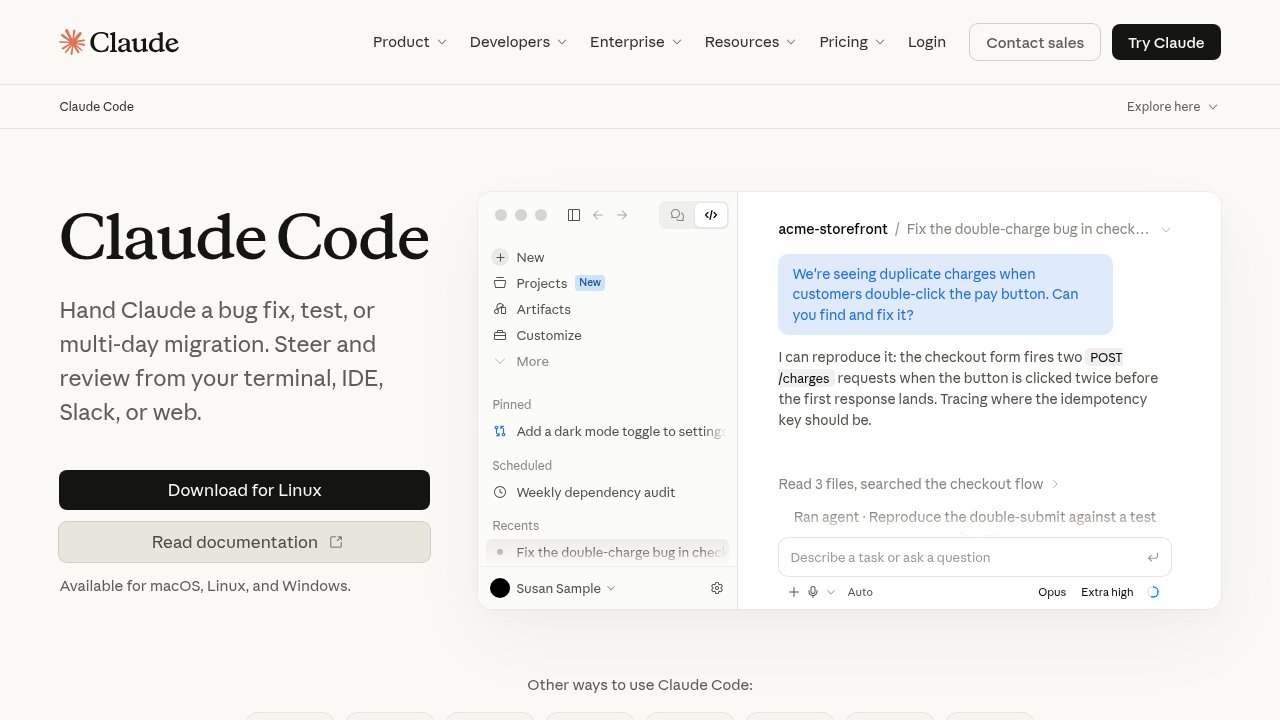 Claude Code — Anthropic’s agentic coding tool, run from a terminal, IDE, or the web.
This also helps explain why a model with no measurable loss on coding evaluations when the prompt was cut could still frustrate testers in the first week. A benchmark measures the model against a clean task. A real project hands it months of accumulated rules, skills, and examples, most of them written for a model that no longer exists. Every’s complaints (arguing, stopping early, breaking existing skills) line up almost exactly with what you would expect from a smarter model tripping over scaffolding built for a less capable one.
What this actually means for your setup
None of this is really about Anthropic’s prompt. It is about the file already sitting in your repository. A CLAUDE.md that has grown for a year, one exception at a time, carries the same problem at a smaller scale: rules for bugs a newer model no longer makes, examples that box in a model that would otherwise use better judgment, and instructions repeated across multiple files because nobody remembered they were already covered elsewhere. Anthropic’s own engineering guidance on “context engineering” describes context as “a finite resource with diminishing marginal returns” and recommends “the minimal set of information that fully outlines your expected behavior.” Read that way, every instruction has a cost and has to earn its place rather than being added by default (that reading is this article’s, not a quote from the guide).
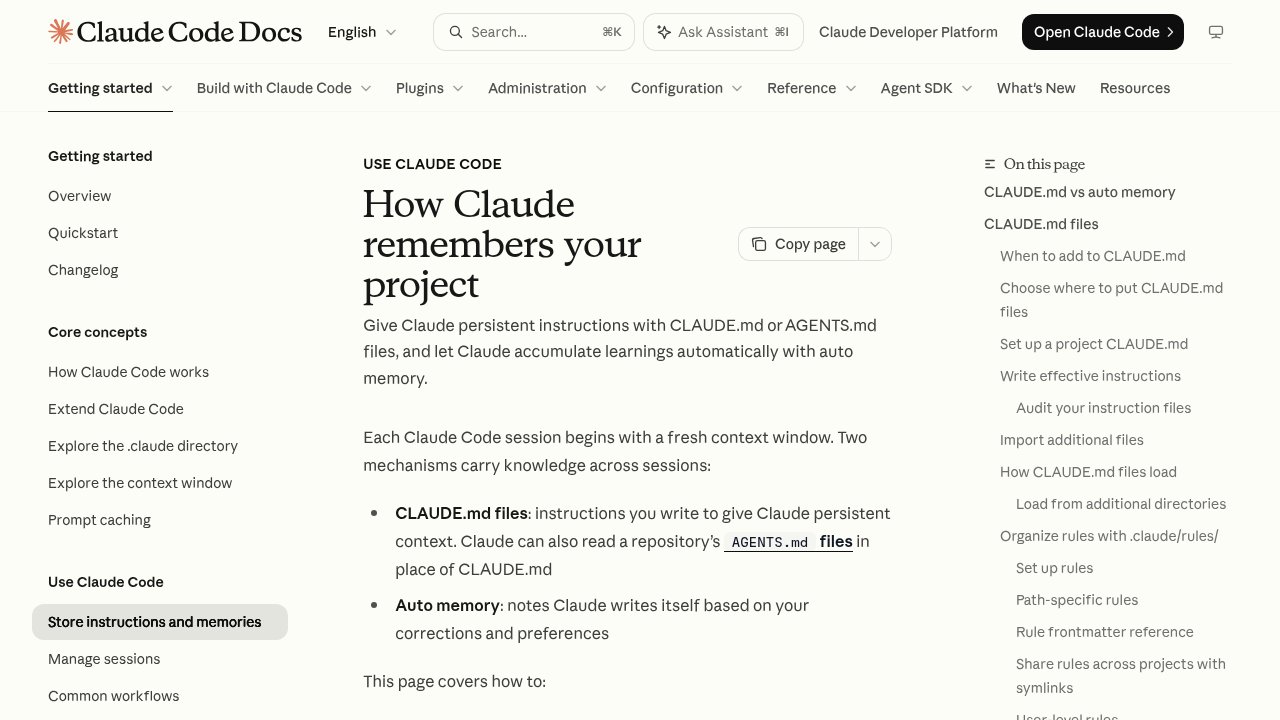 CLAUDE.md and auto memory — Anthropic’s own documentation on how persistent instructions carry across sessions.
Claude Code also ships two concrete ways to test this on your own machine, both aimed at developers rather than casual use. The --system-prompt flag replaces Anthropic’s entire default system prompt with one you write yourself, letting you see exactly how much of the tool’s behavior was coming from instructions versus from the model itself. The --bare option (“Minimal mode: skip auto-discovery of hooks, skills, custom commands, subagents, plugins, MCP servers, auto memory, and CLAUDE.md”) sets the CLAUDE_CODE_SIMPLE variable, according to the official CLI reference; Claude still keeps Bash and file reading and editing. Treat both as developer-facing experiments rather than settled defaults, since options can change between one release and the next.
What to change in your CLAUDE.md tonight
The practical version of all this does not require deleting anything blind. Start by going through your CLAUDE.md and any skills files and flagging every line that exists only to patch a mistake an older model used to make. If you cannot remember the last time that specific mistake happened, it is a candidate to cut. Next, look for worked examples you added so the model would “do it like this one did,” and swap them for a plain description of the goal and, where you can, direct access to the actual code or documentation the model needs, rather than a stand-in example. Claude Code’s built-in /doctor command can help with the mechanical part of this: it flags skills, MCP servers, and plugins that are unused relative to their context cost, slow hooks, and local CLAUDE.md files that duplicate versioned ones, then asks for confirmation before changing anything.
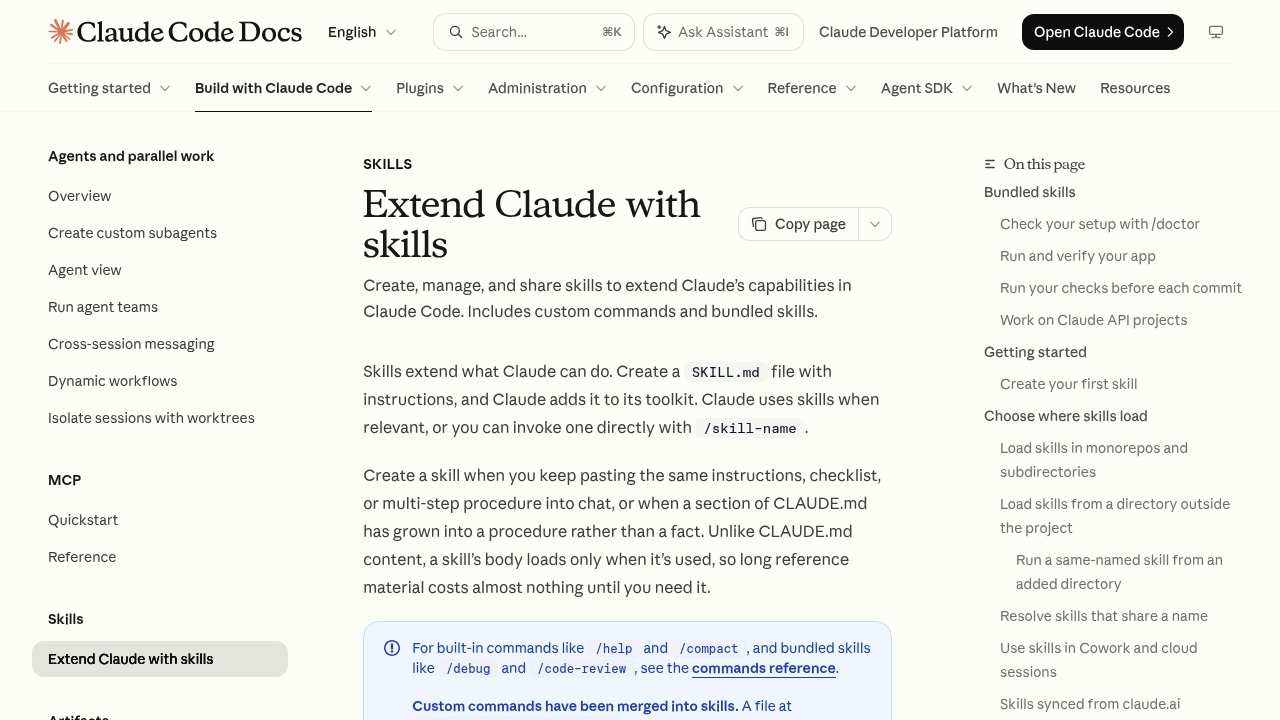 Extend Claude with skills — Anthropic’s docs, listing
/doctor among the bundled skills that check your setup.
Do this gradually, not as a single purge. Cut a section, run your usual work for a day or two, and only put a rule back if the same failure actually resurfaces. The point is not a shorter file. The point is a file where every remaining line has recently proven it is needed.
The shift in style is usually from a narrow, one-off instruction to a short description of the goal itself. A purely illustrative example, not Anthropic’s actual wording, shows the pattern:
Before (a rule patched onto a specific past mistake):
- Never use the deprecated formatDate() helper in utils/.

After (the underlying goal, stated once):
- Match the date-formatting convention already used in the surrounding file.
The second version does not need updating every time a helper gets renamed or replaced. It describes what you actually want, so it keeps working after the codebase, or the model, moves on.
Make it a habit, not a one-time purge
One piece of advice is attributed to Boris Cherny: start over with your CLAUDE.md every six months (a secondhand recap, not independently verified). The idea is to rebuild from nothing rather than guessing what to restore, and only reintroduce a rule once the same problem shows up again on its own. Anthropic’s own post does not prescribe a six-month rhythm or a full reset. What this article suggests is simply to make pruning a habit rather than a one-off cleaning: a model upgrade is exactly the moment old scaffolding stops paying for itself and starts taxing the new model instead.
Where this does not apply
This is not a license to delete every guardrail you have. Two limits matter. First, Anthropic’s “no measurable loss” claim is based on its own coding evaluations, which are not the same as your specific codebase, your team’s conventions, or a task nobody has tested the model against yet; treat the “over 80%” figure as evidence for a principle, not a number to copy exactly (the same gap between a benchmark ranking and your actual workload shows up whenever you pick a model by its leaderboard score alone). Second, cutting instructions is not an improvement everywhere: the post is about constraints in the coding workflow (its examples concern things like code comments and documentation style) and says nothing about safety limits, so nothing in it is a reason to remove them. The lesson is about removing instructions that compensate for a weaker model’s limits, not about removing the limits themselves.

FAQ
What exactly is Claude Code’s system prompt, and how is it different from my CLAUDE.md file?
The system prompt is the standing set of instructions Claude Code itself injects automatically into every session, covering default behavior and tool use. Your CLAUDE.md is a separate file you write yourself inside your own project to add project-specific context. Anthropic’s cut of over 80% applies to its own built-in prompt, not to anything you have written.
Why did Anthropic remove over 80% of it without a measurable loss?
According to the Claude Code team, the old prompt was over-constraining the model, and much of it could be deleted so the model could rely on surrounding context and judgement instead. Instructions that once compensated for older models’ mistakes can become dead weight that competes for attention without adding value.
Can I see the real Claude Code system prompt?
Anthropic has not published the full current text as an official document. Community members have shared partial or reverse-engineered copies on sites like GitHub and Reddit over time, but those snapshots go out of date with every model update, so they should be read as unofficial and temporary rather than as Anthropic’s current, authoritative text.
Should I delete my own CLAUDE.md file right now?
Not in one go. This article’s advice is to remove instructions gradually, watch what actually breaks over real work, and only add a rule back once the same problem shows up again. That works better than either leaving the file untouched forever or deleting it all at once with no way to tell what you will miss. (A reported tip attributed to Boris Cherny, to start over every six months, comes from a secondhand recap and is not independently verified.)