After the Anthropic Ban: Are Cloud Giants Becoming AI API Gatekeepers?
In the weeks after Anthropic's Fable 5 shutdown, the real story is who controls access to frontier AI models, and why cloud giants end up holding the keys.
The Anthropic ban is no longer breaking news: in June, Anthropic abruptly disabled its two most capable AI models, Fable 5 and Mythos 5, after a US Commerce Department export control directive, a shutdown that lasted about 18 to 19 days (from the June 12 order to the July 1 return of Fable 5), after the Commerce Department lifted the export controls on June 30. Mythos 5 came back only for a restricted circle of organizations, and Commerce could reimpose a licensing requirement if the security commitments are not kept. That story, the what, is already told here on DecodeStack: our recap of why Anthropic disabled Fable 5 covers the shutdown of the public-facing Fable 5 and its partner-tier sibling Mythos 5 in detail, so we will not repeat it. What matters now is the after. In the three weeks that followed, reporting surfaced about who was in contact with the administration before the switch, what was said about the model’s capabilities, and which companies are quietly becoming the checkpoint through which frontier AI now has to pass. The practical question for anyone building on an AI API: who actually controls whether your access keeps working tomorrow.
What came out in the three weeks after the switch-off
Project Glasswing is Anthropic’s partner access tier, a more permissive version of its API offered to a vetted list of organizations under stricter contractual terms than the general public gets. According to Anthropic’s June 2, 2026 announcement, Glasswing expanded in early June to roughly 150 additional organizations spread across more than fifteen countries, on top of roughly 50 initial partners. Exact headcounts vary between sources, so treat any precise number with caution; the direction, a rapid widening of who held privileged access right before the cutoff, is the part worth remembering.
The more pointed detail concerns how the export control directive came about in the first place. Reuters and The Information reported that Amazon CEO Andy Jassy was in contact with senior administration officials before the directive. Amazon has not confirmed the details of those exchanges (it says it does not share them), so this should be read as press reporting rather than an established fact, and nothing in it establishes what was said or what Amazon intended. If the reporting holds, it would point to a structural irony worth sitting with: a major investor in Anthropic talks to the government, the government acts, and that same company also runs the cloud infrastructure that many customers use to reach the model in question. Nobody needs to allege a scheme for that to be worth noticing. An investor who may have voiced a concern and a cloud provider that could gain a distribution edge can be the same company without either role being insincere.
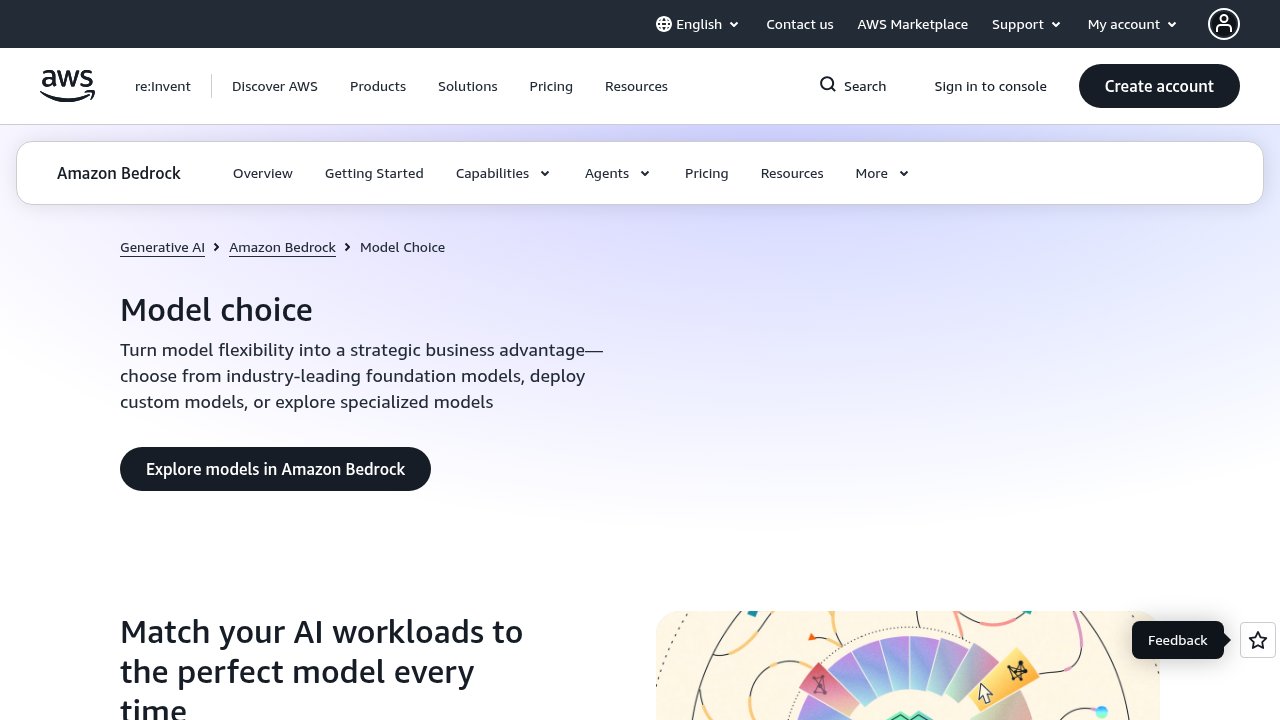
Amazon Bedrock — AWS’s managed service for hosting and deploying foundation models, including Anthropic’s Claude family, to businesses already running on AWS.
What a shutdown cannot undo
Export controls assume you can turn something off. A software model does not quite work that way once it has been copied. A shutdown stops future access; in principle, it does nothing to copies or derivatives that already exist outside the provider’s infrastructure. A closed door stays closed however long it lasts, but it does not reach into whatever already walked through it.
On capability claims, one report deserves its exact attribution. Senator Mark Warner said at a hearing on June 11, 2026 that General Rudd had told him, of the model: “broke into almost all of our classified systems, not in weeks, but in hours.” According to that account, this would have been an internal NSA test on its own networks, the results of which the NSA has not published. The hearing was presumably about a Mythos model, but it cannot be established publicly whether that means Mythos 5 or the preliminary model. In that context, red-teaming is the practice of deliberately attacking a system to find its weaknesses before an adversary does. Treat this strictly as a reported allegation, not confirmed by the NSA, and not as settled fact.
One more item deserves a hard caveat rather than a place in the argument: Wired reported that the White House asked Anthropic to cut off access for SK Telecom, a Glasswing participant, over alleged ties to China. SK Telecom denies any such ties. Read it as a reported claim and do not interpret it beyond that.
Why cloud giants end up as the gatekeepers
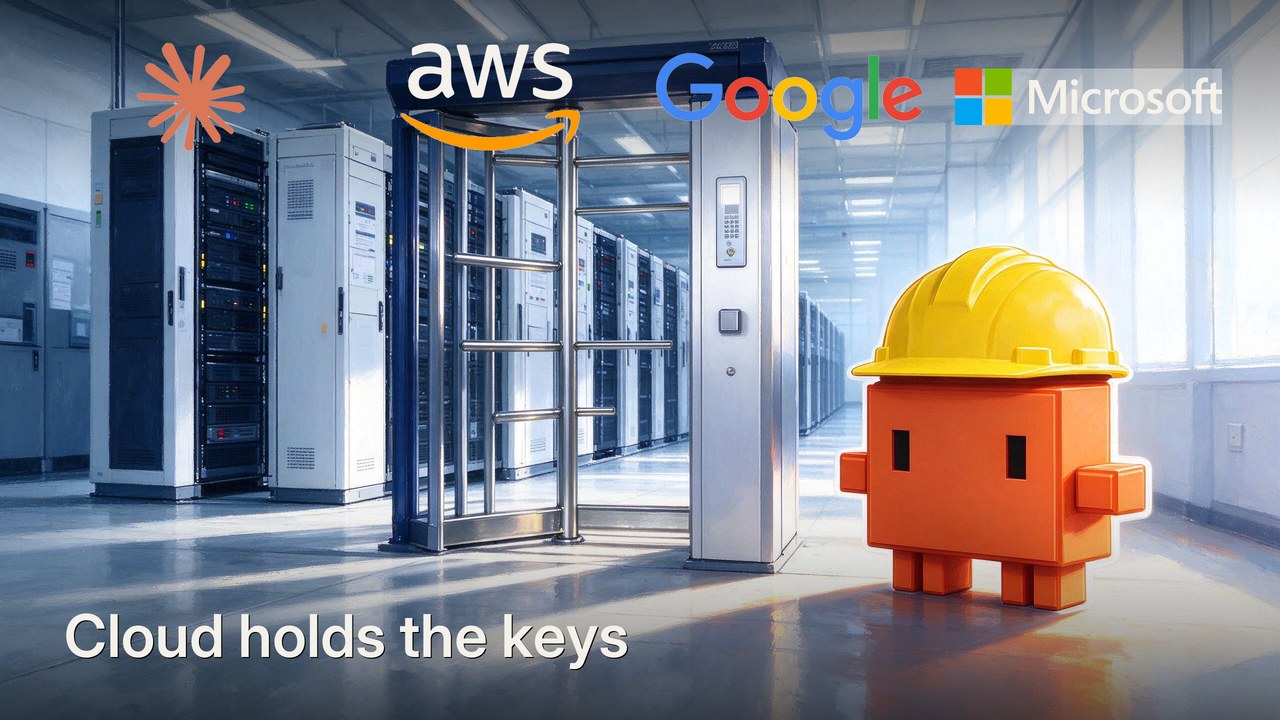
Here is the part of this story that rests on reported figures rather than on who said what to whom. According to Reuters, citing Anthropic’s confidential IPO filing, 47% of Anthropic’s 2025 sales went through its Amazon and Google cloud partners, up from 11% in 2023. Those cloud platforms, AWS Bedrock (Amazon’s service for hosting and distributing third-party AI models to businesses that already run on Amazon Web Services), Google Vertex AI and Microsoft Foundry, act as distribution platforms for the models. That routing choice means Amazon, not just Anthropic, can in principle log and meter usage on its platform and restrict access to it.
That is not a conspiracy. It is a direct consequence of how enterprise cloud contracts are structured: a company already paying Amazon for storage, compute, and networking finds it far simpler to add model access through the same billing relationship and the same compliance paperwork than to set up a separate direct contract with an AI lab. Google’s Vertex AI and Microsoft’s Foundry (renamed from Azure AI Foundry in late 2025) play the identical role for models hosted on their platforms. The pattern is not specific to Anthropic or Amazon. It is what happens whenever a government decides a category of technology needs a compliance layer, meaning the paperwork and screening process, often called know-your-customer or KYC, a term borrowed from banking, that verifies who a customer actually is and whether they are allowed to buy what they are buying.
Running that kind of compliance layer at scale requires three things nobody builds overnight: infrastructure big enough to monitor and throttle traffic without breaking it, compliance staff who understand export law well enough to act fast under a government deadline, and existing relationships with regulators who will actually call before issuing a directive rather than after. Amazon, Google, and Microsoft already have all three, because they built them for cloud hosting long before AI models arrived. Neo-clouds, the newer and often cheaper GPU hosting providers like Coreweave, OVH, or Scaleway, and labs offering a direct line to their API do not have that apparatus, and building it is not a weekend project.
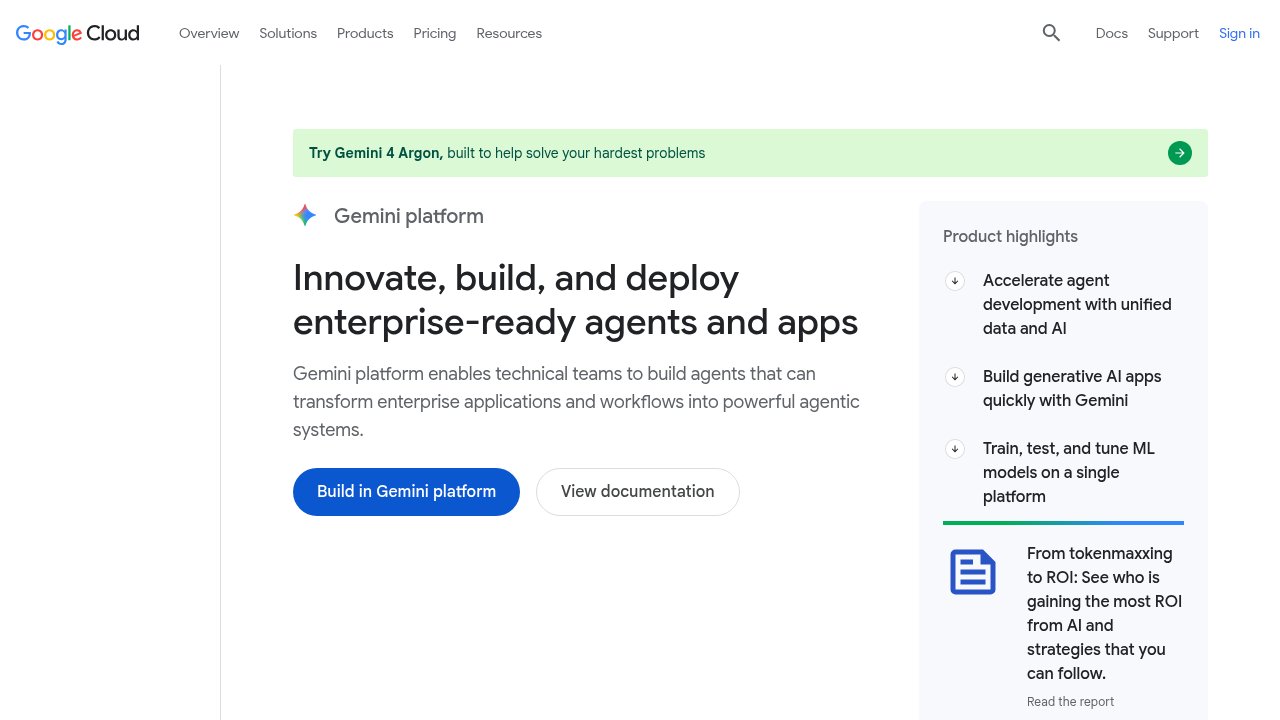
Google Vertex AI — Google Cloud’s platform for hosting foundation models, which plays the same gatekeeper role as AWS Bedrock.
Who loses: neo-clouds and direct API access
The internet went through a version of this consolidation already. In its early years, anyone could run a mail server, a search index, or a hosting business from a spare room. Over time, spam filtering, abuse prevention, and regulatory pressure made running that kind of service at scale expensive enough that a handful of large platforms absorbed most of the traffic, not because smaller operators were worse at the technical job, but because the surrounding compliance burden became the actual barrier to entry. AI model access is tracing a similar curve, just faster.
A developer who calls Anthropic’s API directly, or who rents GPUs from a neo-cloud to run an open model, now carries a kind of risk that barely existed two years ago: revocability, meaning the access that works today can be switched off by a government directive tomorrow with little warning, as the Fable 5 shutdown demonstrated in real time. Going through a hyperscaler does not protect against that. Fable 5 and Mythos 5 were disabled for all customers (the Cloud Security Alliance research note says “disabled globally for all customers within hours of the order”), and secondary sources indicate they were also suspended through Bedrock, Vertex and Foundry. What the hyperscalers have on top is the compliance apparatus and the relationship with regulators, which puts them in a better position to negotiate and restore access, and it also means one more intermediary that sees the traffic. The neo-clouds and the direct-API builders, meanwhile, have neither the compliance department nor the government phone call that the hyperscalers get.
What this means if you build on AI APIs
For anyone deciding how to wire an application to a frontier model, three real options exist, and each carries a different kind of exposure. Calling an AI lab’s API directly is the simplest path and the most exposed: one directive, one compliance decision at the lab, and access can disappear with the kind of short notice Fable 5 users got. Routing through a hyperscaler’s hosting layer, Bedrock, Vertex, or Microsoft Foundry, does not shield you from an export directive (here, according to secondary sources, the models were suspended on those platforms too). It trades direct exposure for a dependency on a middleman with a stronger compliance apparatus and a better position to negotiate the return of access, but also one that sits between the builder and the model, with visibility into everything that passes through.
The third option is the only one that removes the gatekeeper from the equation entirely: open-weight models, where the model’s trained parameters are published for anyone to download and run on infrastructure they control, cannot be switched off by a directive aimed at a single company, because no single company holds the only copy. Our guide to the best open-weight LLM options in 2026 walks through what actually differs between them, since the license terms attached to an open-weight model matter more than its benchmark scores once revocability becomes the question you are actually trying to answer. For teams still weighing whether a closed frontier model like Fable 5 is worth the premium over an open alternative, our comparison of Claude Fable 5 against Opus is a useful companion read on that trade-off.

FAQ
What is AWS Bedrock?
AWS Bedrock is Amazon’s service for hosting and distributing AI models built by other companies, including Anthropic, to businesses already running their workloads on Amazon Web Services. Instead of contracting directly with the model’s maker, a company accesses the model through Amazon’s platform, which means Amazon can in principle log and meter usage on its platform and restrict access to it.
What is Project Glasswing?
Project Glasswing is the name of Anthropic’s partner access tier, a version of its API offered under stricter terms to a vetted list of organizations rather than the general public. Anthropic’s June 2, 2026 announcement describes it expanding in early June to roughly 150 additional organizations across more than fifteen countries, on top of roughly 50 initial partners, though exact figures vary by source.
Why can a company cut off an AI model overnight?
A company can switch off AI model access overnight because the model usually runs on infrastructure the company controls rather than on the customer’s own hardware, so a single configuration change can cut off every user at once. This is exactly what happened when Anthropic disabled Fable 5 following a US Commerce Department export control directive.
Does disabling a model also erase any copies already made of it?
No. Disabling a hosted model only stops new requests from reaching it; in principle, it does not reach any copies, including smaller models trained to imitate the original’s outputs through a process called distillation, that were made before the cutoff. A shutdown closes future access, it does not recall what already exists elsewhere.
Is routing AI access through a cloud provider like AWS Bedrock safer than using a direct API?
Not against an export directive. Going through AWS Bedrock or a similar hyperscaler service does not protect against such a directive: here, according to secondary sources, Fable 5 and Mythos 5 were suspended on Bedrock, Vertex and Foundry as well. What hyperscalers add is compliance infrastructure and relationships with regulators, which puts them in a better position to negotiate and restore access, but it also adds an intermediary that sees and can gate every request. Direct API access avoids that middleman but carries the same exposure to abrupt revocation.