Visa 'Zombie Cards': Why Two Phones Could Revive an Expired Card
Researchers used an NFC relay between two phones to get a payment terminal to accept an expired Visa card. Here's why it only worked on Visa.
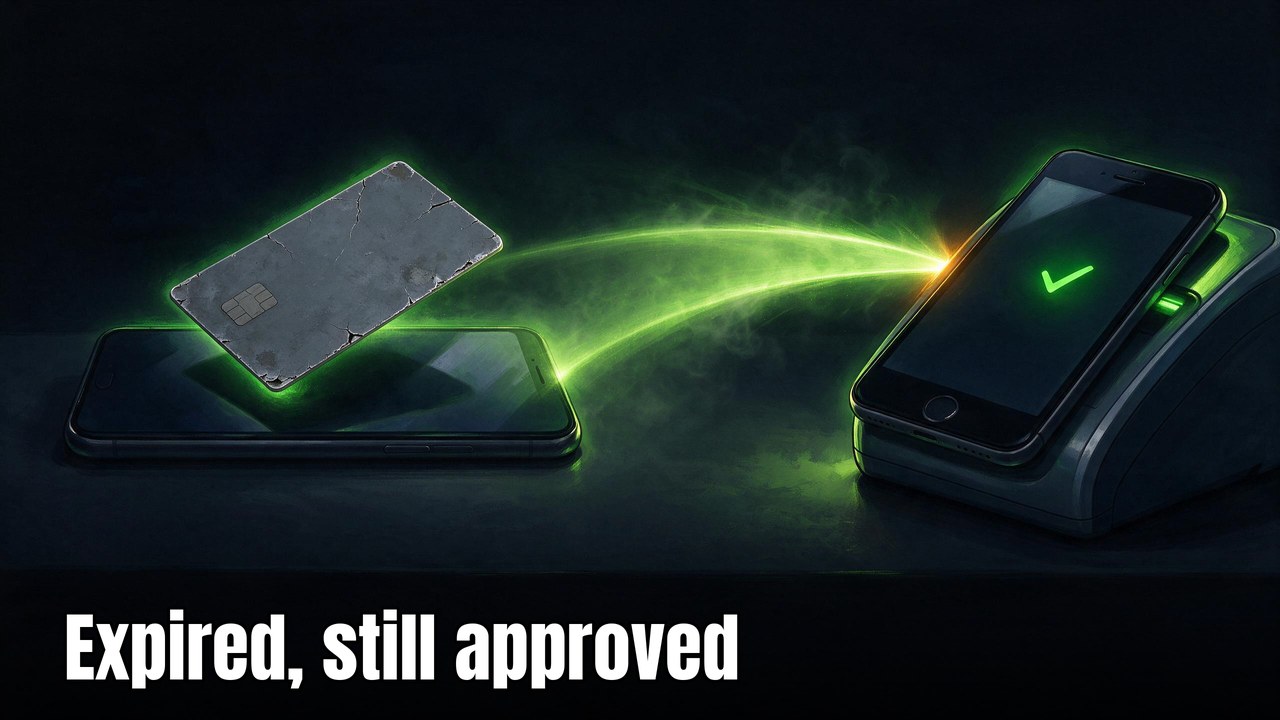
A credit card’s expiration date feels like one of its simplest security features: the card stops working, end of story. At USENIX Security 2026, the annual computer security research conference held in Baltimore this past August, three researchers from the University of Massachusetts Amherst showed that on one major payment network, that date is not actually enforced the way most people assume. Using two ordinary Android phones, Raja Hasnain Anwar, Gerard DeCunha, and Muhammad Taqi Raza got a contactless payment terminal to accept a physically expired Visa card. Their paper, titled “Zombie Cards Back Online: Reviving Expired Credit Cards for Contactless Payments,” calls the technique the “Zombie Card” attack. It is not a product or a tool anyone can download. It is a demonstration of a design gap, and the more interesting part is exactly where that gap sits.
Two phones, an NFC relay, and an expired card that still works
The setup relies on NFC, the short-range wireless standard that lets a contactless card or phone “tap” a terminal to pay. It only works over a few centimeters, which is normally treated as a safety net: you have to be right next to the reader for anything to happen. The researchers’ technique breaks that assumption not by extending the range in some exotic way, but by using two phones as a relay, a pair of go-betweens that pass the conversation along in real time.
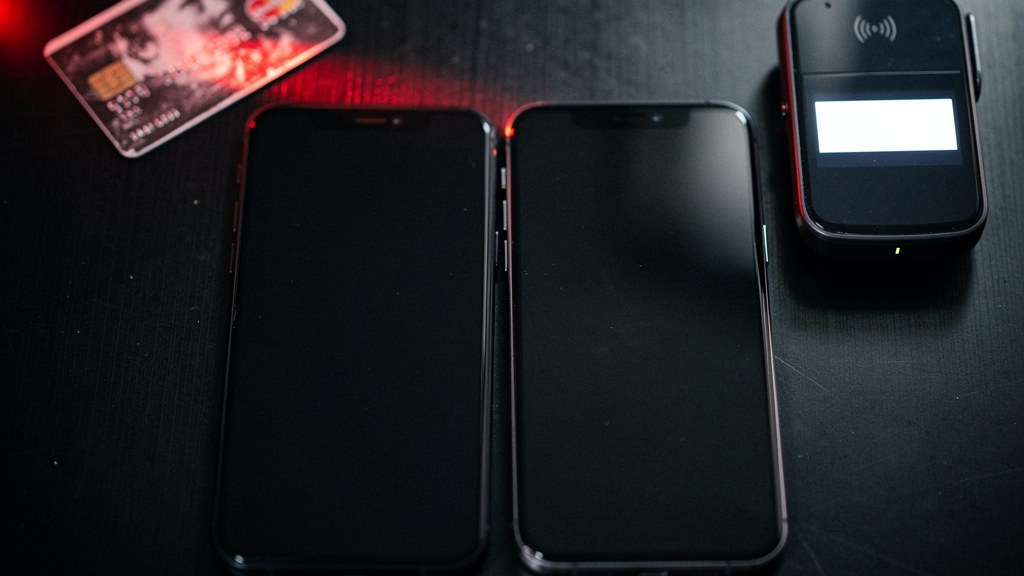
One phone sits next to the expired card and reads it, exactly like a terminal would. The second phone sits next to the actual payment terminal and pretends to be the card, forwarding everything the first phone captured. In the middle of that back-and-forth, the researchers altered a single data field in transit: the “Application Expiration Date,” the piece of information a contactless transaction sends to tell the terminal when the card is valid until. By the time the modified date reaches the terminal, the card looks current, even though the physical card in someone’s hand has already expired.
That is the entire mechanical trick. No cloning, no stolen card numbers, no breaking any cryptography. The attack works because a field that looks fixed and reliable can be edited in the middle of the conversation between the two ends. What determines whether that edit actually gets away with anything is not the phones or the relay. It is how the payment network’s own rules treat that one date field.
Why this only worked on Visa
Contactless payments run on a shared technical standard called EMV (the abbreviation comes from Europay, Mastercard and Visa, the three organizations that originally built it), but each card network implements its own variant of that standard, called a kernel, the specific set of rules a terminal follows for a given card brand. Visa uses Kernel 3. Mastercard uses Kernel 2. American Express uses Kernel 4. Discover uses Kernel 6.
The researchers ran the identical trick, the same relay, the same in-transit edit of the expiration date, against all four. On Visa’s Kernel 3, the terminal accepted the altered date and approved the transaction. On Mastercard, the manipulation broke a consistency check: altering the expiration date without updating a second copy of that same date encoded elsewhere in the transaction created a mismatch the issuer caught, and the transaction was declined. On Amex and Discover, it broke an actual signature check, a cryptographic verification that confirms the data a terminal receives has not been tampered with since the card produced it, and both rejected the transaction outright.
EMVCo — the industry body that defines the EMV kernel specifications tested here: Kernel 2 (Mastercard), Kernel 3 (Visa), Kernel 4 (Amex), Kernel 6 (Discover).
That distinction matters more than the headline “researchers revive expired cards.” This is not a flaw in contactless payments generally, and it is not a weakness in the EMV standard itself. Mastercard, Amex, and Discover were tested with the exact same technique and held. The problem is specific to how Visa’s Kernel 3 handles one particular field, not to the broader idea of tapping a card on a reader.
An expiration date that is policy, not proof
Here is the actual gap the researchers found. On most fields in an EMV transaction, like the transaction amount or the card’s account data, the terminal can mathematically verify that nothing has been changed since the card signed off on it. If an attacker edits those fields in transit, the signature check fails and the terminal knows immediately.
The expiration date on Visa’s implementation does not get that same protection. It is checked by the terminal as a policy rule, a plain “is this date still in the future” comparison, rather than as a value that is cryptographically bound to the transaction’s signature. Change the date, and nothing downstream notices, because nothing downstream was ever set up to notice a change in that specific field.
The useful idea here goes beyond this one case. In a well-designed security protocol, it is easy to assume that every piece of data carries the same guarantee simply because it travels alongside data that does. A shopper glancing at a card sees one continuous, trustworthy exchange between chip and terminal. In practice, some fields are locked down by cryptography and some are enforced only by a rule the terminal happens to apply. Those two kinds of protection look identical to everyone except the people who designed the system, and telling them apart is exactly the researchers’ contribution here, not the theatrics of reviving an expired card.
Fifteen months, no confirmed fix
The researchers followed standard practice for this kind of discovery: responsible disclosure, reporting the issue privately to the affected party before publishing, so there is time to fix it before attackers learn about it. They notified Visa and banking partners in May 2025, followed up again in December 2025, and as of their USENIX presentation in August 2026, no public fix, advisory, or mitigation had been issued by Visa, by EMVCo (the industry body that governs the EMV standard), or by any of the banks or terminal vendors involved. Coverage from outlets including The Hacker News has independently confirmed that status as of this writing. No CVE, the standard tracking number assigned to a publicly disclosed security flaw, has been assigned to the issue either.
USENIX Security 2026 — the conference listing for “Zombie Cards Back Online: Reviving Expired Credit Cards for Contactless Payments,” the paper behind this story.
That is fifteen months between first disclosure and a research paper going public with no fix in place, as far as anyone outside Visa can currently confirm. It is worth being precise about what that timestamp does and does not mean: it describes the status as of the researchers’ presentation and independent verification around it, not a permanent state of affairs. A fix could appear at any point after this article is written, quietly, the way most payment-network patches do, without a press release attached to it.
What this actually means for someone using a Visa card today
This is the part where it is easy to overstate the risk, and the researchers’ own data argues against doing that. They tested transactions ranging from $1 to $500 against five major US banks. Three of those banks appear in the researchers’ real-world expired-card trials, and only two of those three actually used a physically expired card. At one bank, the manipulated transaction was approved repeatedly, across multiple amounts and two separate real-world purchases. At the other, the terminal was fooled every time, but the bank’s own backend caught and declined the transaction anyway. The third bank was tested on a kernel the researchers found unaffected regardless (Discover’s Kernel 6), using a card that had not actually expired. That is a genuinely small sample, and it does not show that this technique reliably works against real banks in production. It shows that the underlying design gap is real and that, in at least one documented instance, it produced repeated approved transactions outside a lab setting.
Practically, none of this changes what a Visa cardholder needs to do differently today. The attack requires physical possession of someone’s actual expired card, two phones running custom relay software, and proximity to both the card and a terminal at effectively the same moment, a considerably higher bar than the phrase “revive expired cards” suggests on its own. It is not a remote exploit and there is no indication of it being used outside the researchers’ own testing.

FAQ
What is a “zombie card” attack?
A zombie card attack is the name researchers gave to a technique that uses two phones as a relay to get a payment terminal to accept a physically expired Visa card. One phone reads the expired card and a second phone communicates with the terminal, altering the card’s expiration date field along the way so the terminal sees it as still valid.
Does this affect Mastercard, Amex, or Discover cards too?
No. The researchers tested the identical relay technique against Mastercard, American Express, and Discover. Mastercard caught the tampering with a consistency check between two copies of the expiration date encoded in the transaction; Amex and Discover caught it with a cryptographic signature check. All three rejected the transaction. The gap is specific to how Visa’s EMV Kernel 3 checks the expiration date.
Has Visa fixed this vulnerability?
As of the researchers’ USENIX Security 2026 presentation and independent verification shortly after, no public fix, advisory, or CVE had been issued by Visa, EMVCo, or the banks involved, roughly fifteen months after the issue was first privately disclosed. That status reflects the situation at the time of writing and could change without a public announcement.
Can someone actually use this to make fraudulent purchases right now?
It requires physical possession of a specific expired card, two phones running custom relay software, and being close to both the card and a payment terminal at the same time. In the researchers’ real-world bank trials, only two banks were actually tested with a physically expired card: the technique succeeded repeatedly at one, while the other bank’s backend caught and blocked it — so it is not a demonstrated reliable method against production payment systems.
Why wasn’t the expiration date protected by the same cryptography as other card data?
On Visa’s Kernel 3 implementation, the expiration date is checked by the terminal as a simple policy rule rather than a value cryptographically tied to the transaction’s signature. Other fields, like the account data, do carry that cryptographic protection, which is why altering them breaks the transaction while altering the date does not.