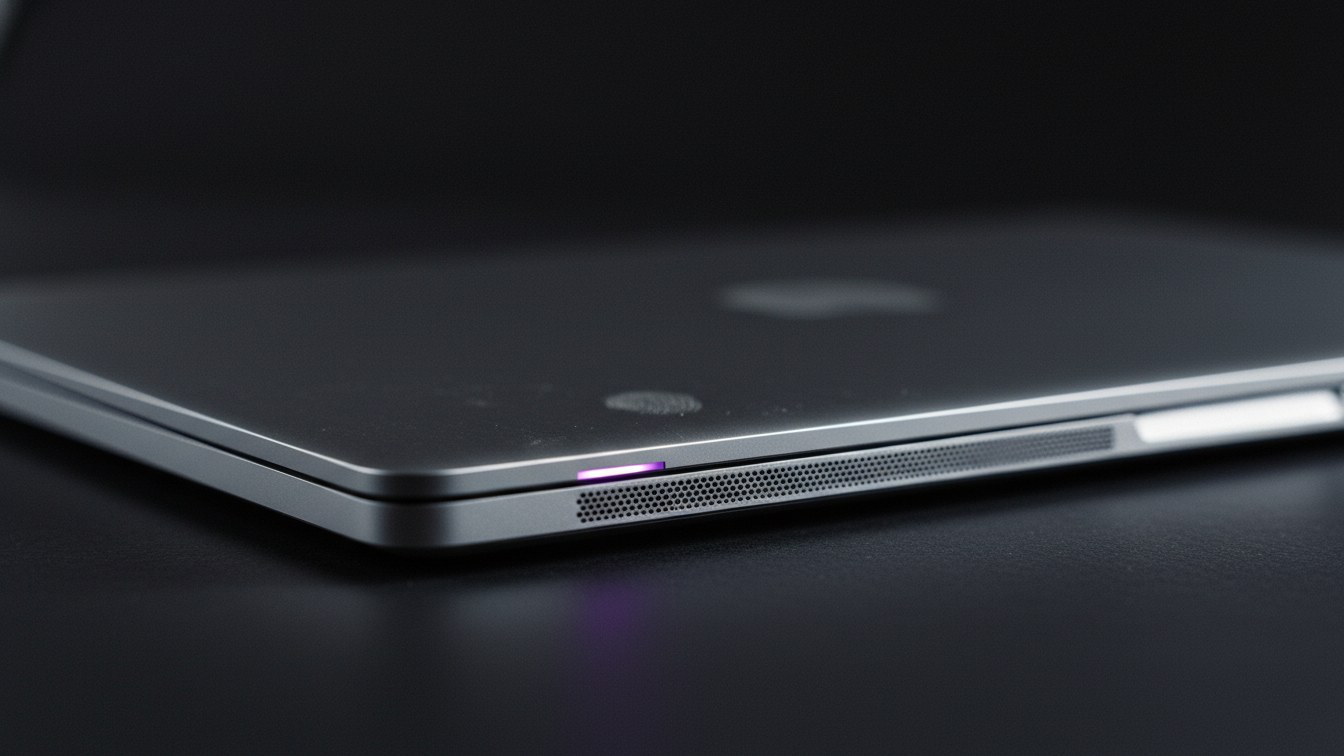
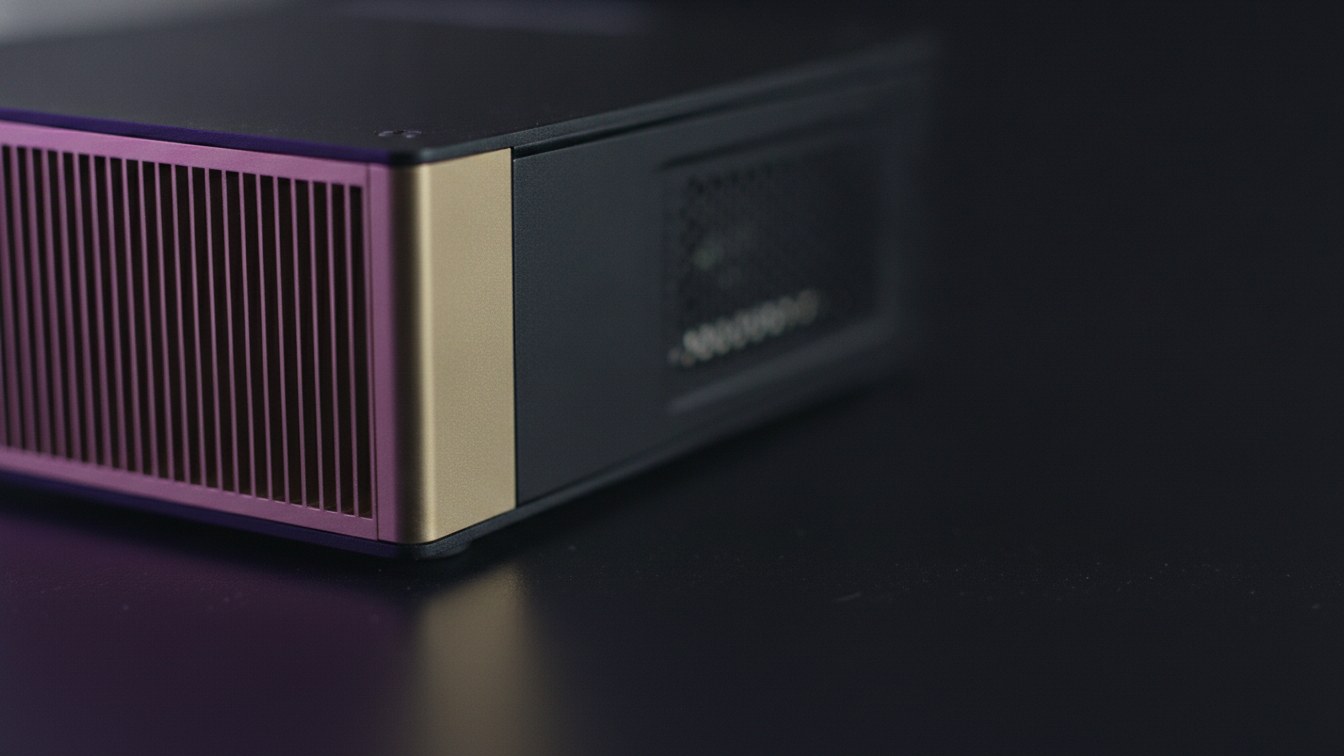
Apple's New M6 and M5 Ultra Chips Are Built to Sell You on Local AI
Apple's new Mac mini and Mac Studio lean on AI-compute claims, not just speed. Here's what the M6 and M5 Ultra chips actually change, and for whom.
Apple’s New M6 and M5 Ultra Chips Are Built to Sell You on Local AI
Apple just announced new versions of the Mac mini and the Mac Studio, and for the first time the pitch is not really about how fast your video export will be. It is about how much of a large AI model you can load and run entirely on your own desk, without sending a single prompt to the cloud. The chips inside, called M6 and M5 Ultra, are still Apple Silicon, still run macOS, still look like the machines Apple has sold for years. What has changed is the sales pitch, and that shift says something durable about where desktop computing is headed.
What Apple actually announced
The new Mac mini ships with Apple’s M6 chip, the company’s first processor built on a 2-nanometer manufacturing process (a measure of how small the transistors are; smaller generally means more computing packed into the same space, at lower power). The base M6 configuration pairs a 12-core CPU with a 12-core GPU that includes dedicated Neural Accelerators in each core, plus a dual 16-core Neural Engine, a separate chip block built specifically to run AI workloads efficiently rather than general-purpose tasks. This entry Mac mini starts at 16GB of shared memory and can be configured up to 32GB, with storage options between 256GB and 2TB.
A separate, pricier Mac mini configuration uses an M5 Pro chip instead, ranging from 15 CPU cores and 16 GPU cores up to 18 CPU cores and 20 GPU cores, with 24GB to 64GB of memory. This is a genuinely different chip in a genuinely different price bracket from the base M6 Mac mini, and the two get conflated constantly in casual coverage. If a headline just says “Mac mini” without naming the chip, it could be either machine.
At the top of the range, the Mac Studio arrives in two flavors. The mid-tier uses an M5 Max chip (18-core CPU, up to 40-core GPU, up to 128GB of memory). The flagship uses the M5 Ultra, a genuinely new kind of chip for Apple: it is built by fusing four separate silicon dies together using what Apple calls UltraFusion, its interconnect technology for joining multiple chips into one that behaves like a single processor. Apple has built two-die Ultra chips before; this is the first time it has gone to four. The M5 Ultra scales from a 30-core CPU and 64-core GPU with 96GB of memory at entry, up to 36 CPU cores and 80 GPU cores at the top.
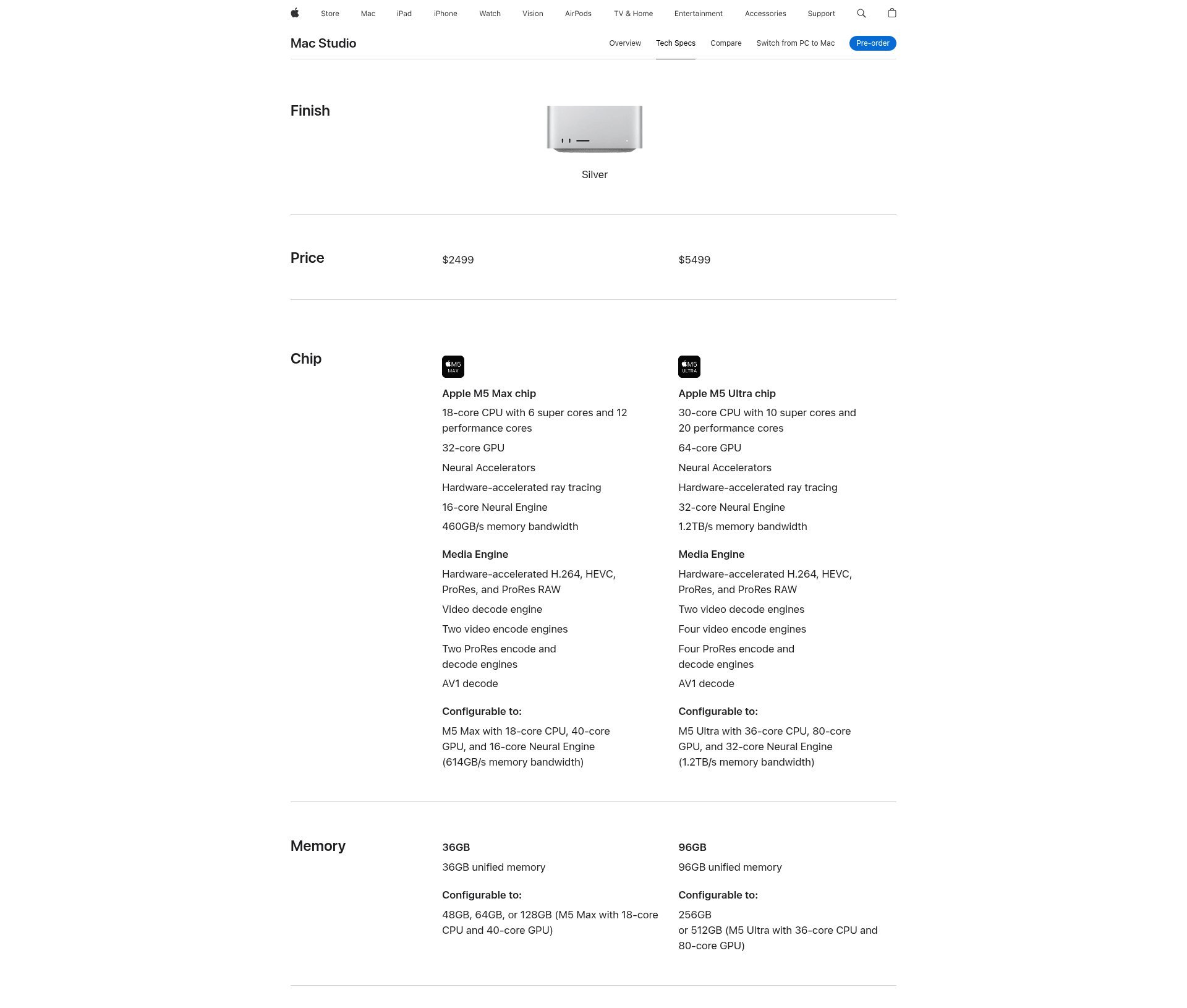
Mac Studio — Apple’s official tech-specs page for the M5 Max and M5 Ultra Mac Studio configurations.
Here is a nuance worth sitting with: even the flagship configuration is not fully available at launch. The 512GB memory tier for the M5 Ultra Mac Studio arrives later, in late October, weeks after the general launch. Apple opened pre-orders around the announcement, but general availability across the lineup is September 22, 2026. None of this hardware is on shelves yet, and the biggest-memory version will not ship for another two months after that. Apple has also not published exact retail pricing on pages that could be independently confirmed at the time of writing; treat any specific dollar or euro figure circulating in early coverage as a press estimate, not an Apple-confirmed number, until the checkout pages are live.
Why Apple is calling this an AI machine, not just a faster Mac
Apple’s own marketing language for this launch leans heavily on AI-specific comparisons rather than the general performance claims it has used for years. For the M6, Apple says its GPU delivers nearly 30 percent more peak GPU compute for AI compared with the previous M5 chip, one generation back in the same family. That is specifically a claim about GPU compute for AI workloads, not a broad performance score, and it compares M6 against its own immediate predecessor, not against any competitor’s hardware.
Separately, Apple’s Mac mini marketing also claims up to 4 times faster AI performance for the new M6 Mac mini, compared against the outgoing Mac mini built around the M4 chip. It is worth being precise about what that means in practice: this is a number Apple is putting on Apple’s own product, measured against its own previous-generation model, not an independently verified benchmark from a lab or reviewer, so it deserves to be read as a marketing claim rather than settled fact.
The M5 Ultra gets its own multiplier, and it is a different comparison entirely. Apple says the M5 Ultra delivers up to 4.3 times the peak AI compute performance relative to the M3 Ultra, the chip family from two generations earlier, not the M5 Max sitting one tier below it in the current lineup. Mixing up which chip a multiplier is measured against is an easy mistake to make when skimming a press release, and it is exactly the kind of detail that turns into a wrong headline.
On the memory side, Apple quotes two genuinely different bandwidth numbers that also get confused with each other. The M6 in the Mac mini offers up to 170GB/s of unified memory bandwidth (a measure of how fast the chip can read and write to its shared memory pool). The M5 Ultra, a completely different chip in a completely different class of machine, has an inter-die bandwidth of over 4.4TB/s connecting its four fused dies to each other, and a separate unified memory bandwidth of 1.2TB/s, which Apple says is 50 percent higher than the previous M3 Ultra. Those are three unrelated figures describing three different things in two different chips. None of them are independently audited numbers; they are Apple’s own published figures about Apple’s own hardware.
Unified memory versus VRAM: why this is not an apples-to-apples comparison
Before comparing any of this to Nvidia’s local-AI hardware, it helps to look at DecodeStack’s earlier piece on running AI models on dedicated GPU hardware, which lays out the tradeoff this entire category of machine is built around.
Every Apple Silicon chip, from the smallest MacBook Air to the M5 Ultra, uses what Apple calls unified memory: one single pool of memory shared by the CPU, the GPU, and the Neural Engine, instead of separate memory reserved for each part. On a traditional gaming or workstation graphics card, the GPU has its own dedicated memory, commonly called VRAM, physically soldered onto the card and invisible to the rest of the system. If a task needs more memory than that card carries, the task simply cannot run on that GPU, no matter how much regular system memory the computer has elsewhere.
This distinction is exactly why the Apple Silicon approach is competitive for large local AI models specifically because of memory capacity, not raw speed. A large language model that needs, say, 90GB of memory just to load can fit inside an M5 Ultra machine configured with enough unified memory, because the entire pool is available to the task. That same model would be out of reach for a graphics card whose VRAM tops out well below that figure, unless it gets split up, offloaded to slower system memory, or otherwise compromised.
That is the fair comparison to Nvidia’s DGX Spark, which DecodeStack covered in a comparison against the ASUS Ascent GX10, a rival box built on the same underlying Nvidia chip. Nvidia’s small AI desktop systems also use a form of shared, on-package memory rather than a separate dedicated VRAM pool, which is part of why they exist as a category at all: to let individual developers and small teams run models that would otherwise require a rack of data-center GPUs. But a shared memory pool is not automatically the faster or better option, it is a different tradeoff. Nvidia’s ecosystem, built around its CUDA software platform (the toolkit most AI research and training code is written against), remains the default for anyone doing serious model training or squeezing out maximum raw throughput. A dedicated GPU like an RTX 5090 will typically outrun a unified-memory Mac on tasks that fit comfortably within its VRAM, because dedicated, purpose-built memory bandwidth per core has real advantages when capacity is not the constraint.
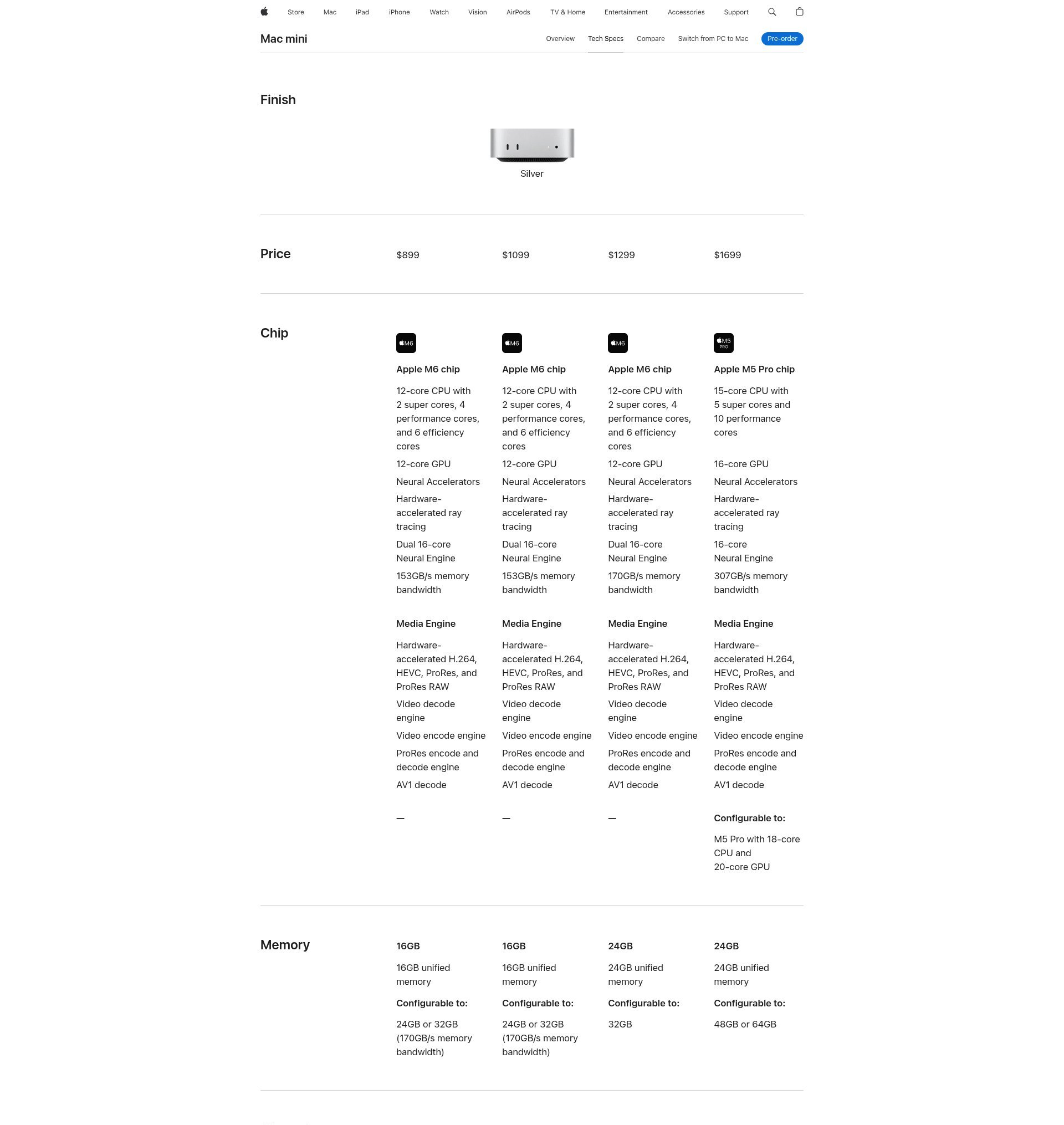
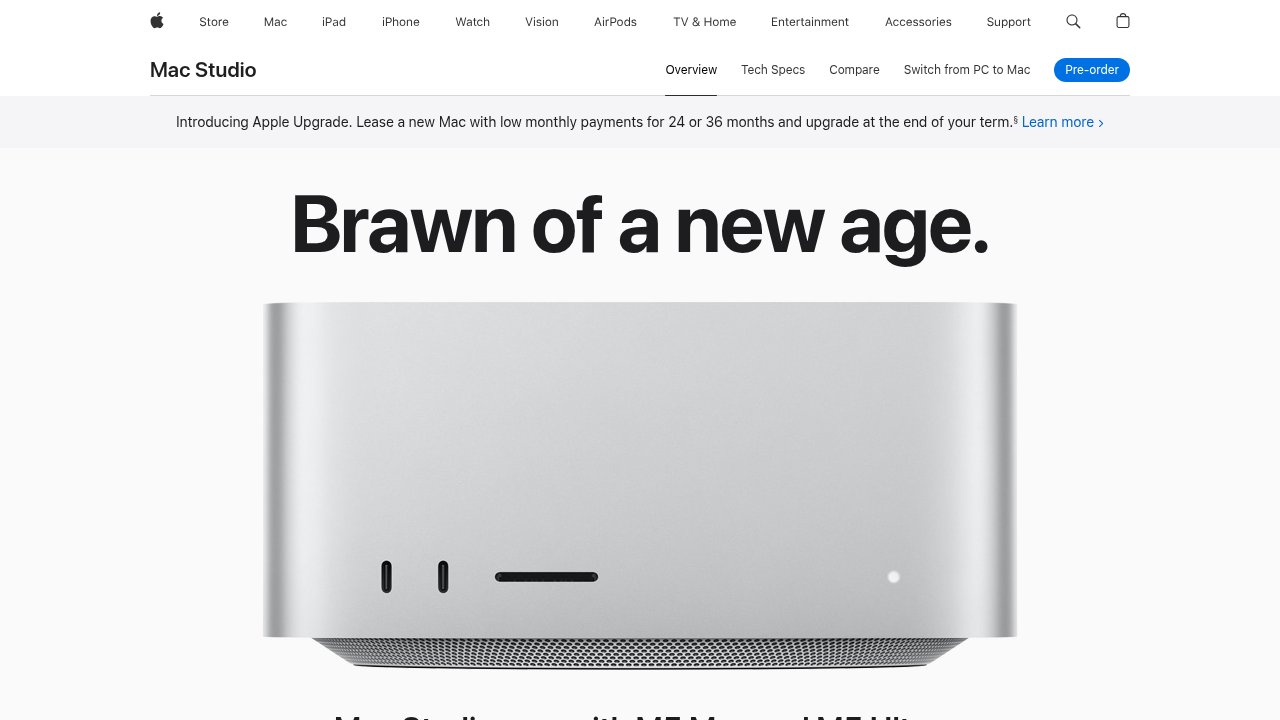
Mac mini — Apple’s official tech-specs page for the M6 and M5 Pro Mac mini configurations.
So the honest framing is not that Apple beats Nvidia, or the reverse. It is that memory capacity and raw computational throughput are two different bottlenecks, and these machines are optimized for different sides of that tradeoff. A bigger shared memory pool means a bigger model can be loaded at all. A dedicated GPU with less total memory but a mature, widely supported software ecosystem often means that model runs faster once it is loaded, provided it fits.
Who this actually makes sense for
None of this warrants a verdict, because the right machine depends entirely on what someone is actually trying to do locally.
If someone wants to run a large open-weight language model on their own hardware, for privacy, for offline use, or simply to avoid a subscription, and the model in question is large enough that consumer GPU memory becomes the limiting factor, the M5 Ultra Mac Studio’s unified memory ceiling (up to 512GB once that tier ships in late October) is a genuine advantage that a comparably priced GPU setup cannot match on capacity alone. DecodeStack’s guide to choosing an open-weight model is a useful starting point for sizing that decision correctly, since model size, not brand, is what determines memory needs.
If the work instead involves training models from scratch, heavy fine-tuning, or workloads already built around CUDA-specific tooling, the Nvidia ecosystem remains the more mature and better-supported choice, and switching to Apple Silicon would mean fighting the software rather than the hardware.
For most people considering either the entry M6 Mac mini or the mid-tier M5 Max Mac Studio, the AI-compute marketing is largely beside the point. These are solid general-purpose desktop machines whose Neural Engine improvements help everyday tasks like photo processing, voice transcription, and on-device features baked into macOS, not large local language models. The AI multipliers Apple is advertising apply mainly to the flagship M5 Ultra tier, where the memory headroom is large enough to matter.

FAQ
What is the difference between the Apple M6 chip and the M5 Ultra?
The M6 is a single chip built on a new, smaller manufacturing process and ships in the entry-level Mac mini. The M5 Ultra is four separate chip dies fused together into one larger processor, aimed at the high-end Mac Studio. They serve different machines at very different price points and should never be treated as versions of the same product tier.
Can the new Mac Studio replace a dedicated Nvidia GPU for AI work?
It depends on the task. The Mac Studio’s unified memory lets it load AI models too large for a single graphics card’s dedicated memory, which is a real advantage for running big models locally. For training models or work tied to Nvidia’s CUDA software tools, a dedicated GPU setup generally remains the stronger and better-supported option.
Is unified memory the same as VRAM?
No. Unified memory is one shared pool used by the CPU, GPU, and Neural Engine together, common to all Apple Silicon chips. VRAM is memory dedicated exclusively to a graphics card and invisible to the rest of the computer. Unified memory trades some raw graphics speed for the ability to load much larger tasks without hitting a fixed memory ceiling.
When can I actually buy the new Mac mini or Mac Studio?
General availability for the new Apple M6 Mac mini and M5 Ultra Mac Studio lineup is September 22, 2026, following an announcement on August 25, 2026. The highest-memory Mac Studio configuration, with 512GB of unified memory, does not ship until late October, several weeks after the rest of the lineup becomes available.
Are Apple’s AI performance claims independently verified?
No. Figures like the nearly 30 percent GPU compute increase for the M6, or the up to 4.3 times claim for the M5 Ultra, come directly from Apple’s own marketing materials, comparing its new chips against its own earlier chips. They have not been confirmed by independent benchmark testing and should be read as company claims rather than settled, third-party-verified results.
The takeaway
The specific multipliers Apple is quoting this week will look dated within a year or two, the way every chip-generation number always does. What will not change as quickly is the underlying tradeoff this launch makes explicit: a shared memory pool that removes a hard ceiling on model size, at some cost to the raw throughput and software maturity that a dedicated Nvidia GPU still offers. That tradeoff, not this specific chip name, is the thing worth remembering the next time a new local-AI machine gets announced with a big multiplier attached to it.