ASUS Ascent GX10 vs NVIDIA DGX Spark: Same Chip, Lower Bill
The ASUS Ascent GX10 and NVIDIA DGX Spark run the exact same chip, so they're equally fast. Here's what really separates them, and which to buy.
ASUS Ascent GX10 vs NVIDIA DGX Spark: Same Chip, Lower Bill
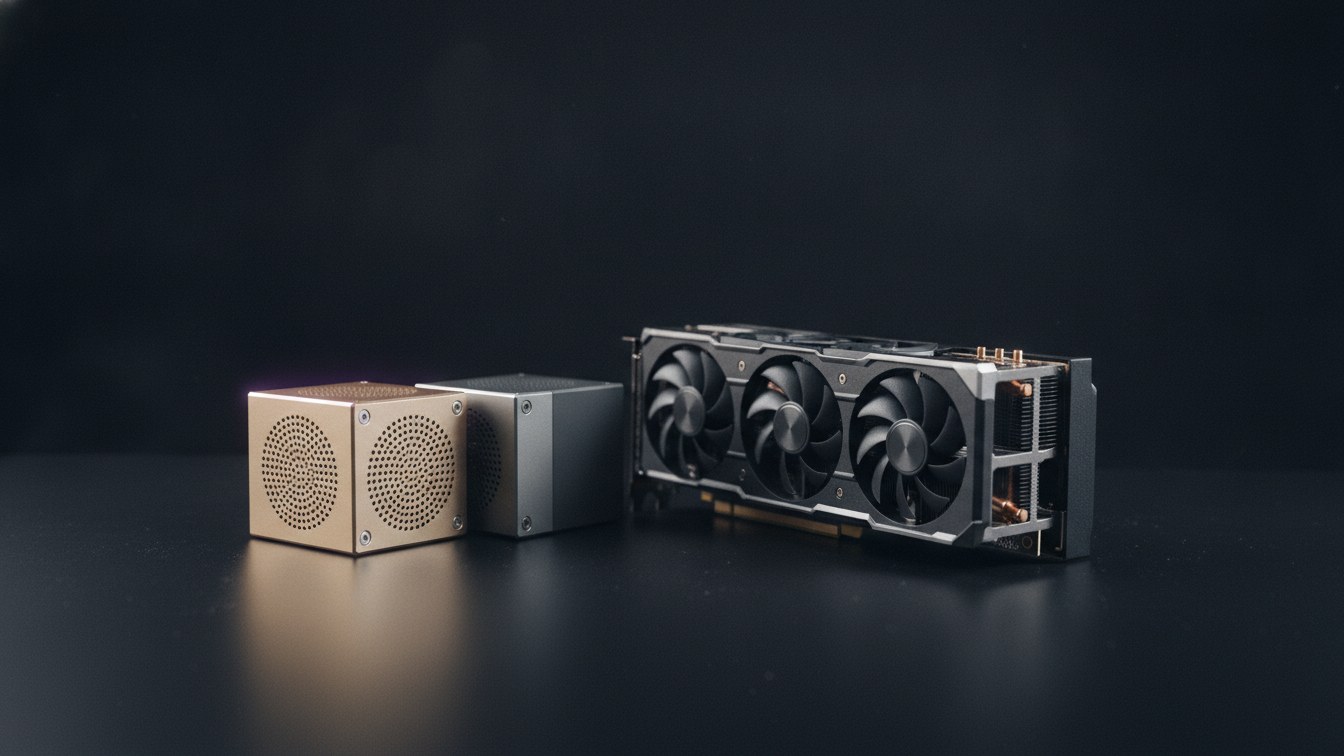
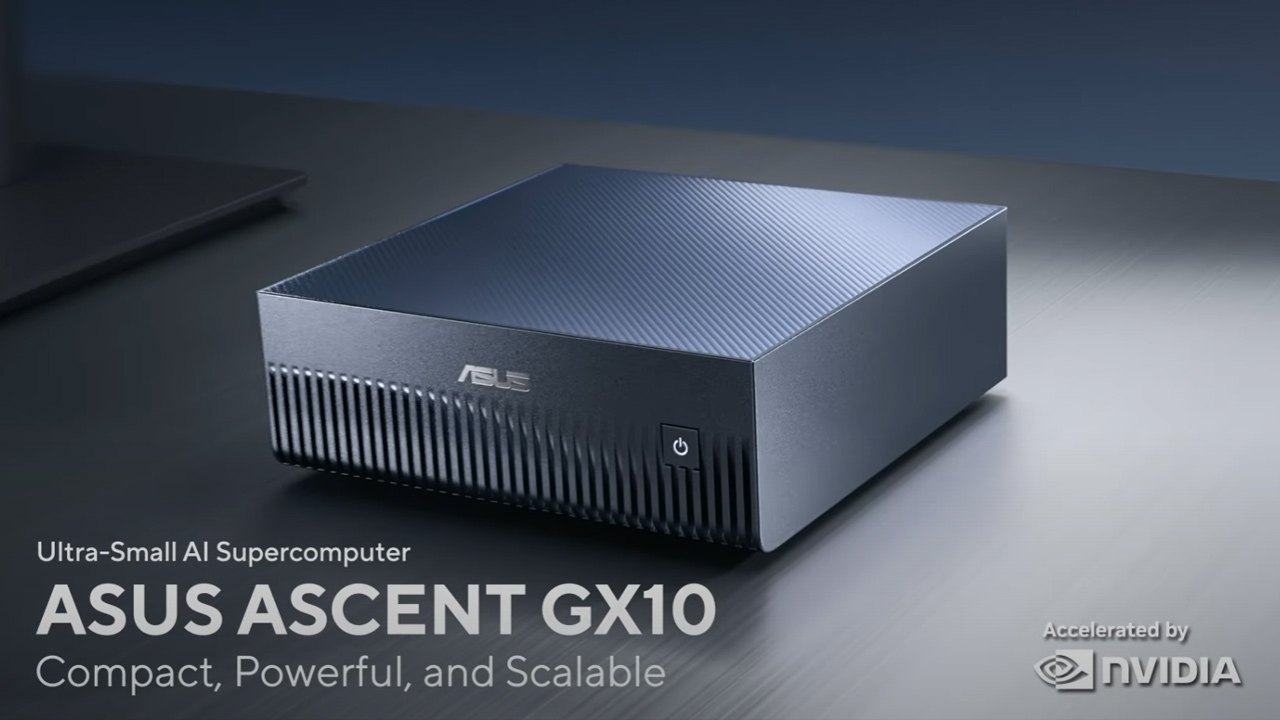
If you want to run a large AI model on your own desk instead of renting one in the cloud, two small boxes keep coming up: the ASUS Ascent GX10 and NVIDIA’s DGX Spark. They get written up as rivals, the way two phones or two laptops do. But that framing hides the one fact that should decide your purchase. Both machines are built around the exact same processor, NVIDIA’s GB10 chip, with the same amount of memory and the same internal plumbing. Open either one up and the part doing the work is identical.
That single fact reshapes the whole question. When two products share the same engine, there is no faster one to find. So the comparison is not really about speed. It is about price, about what you can change yourself later, and about who picks up the phone when something breaks. Those are the only places the two boxes actually differ, and that is the durable point worth keeping.
One chip, two boxes
The GB10 is a single chip that NVIDIA designed to run AI models on a desktop without a separate graphics card bolted on. ASUS and NVIDIA both buy that same chip and wrap their own case, power supply, and warranty around it. ASUS did not build a cheaper engine; it built a cheaper box around NVIDIA’s engine. That is why the two machines behave the same when you actually use them.
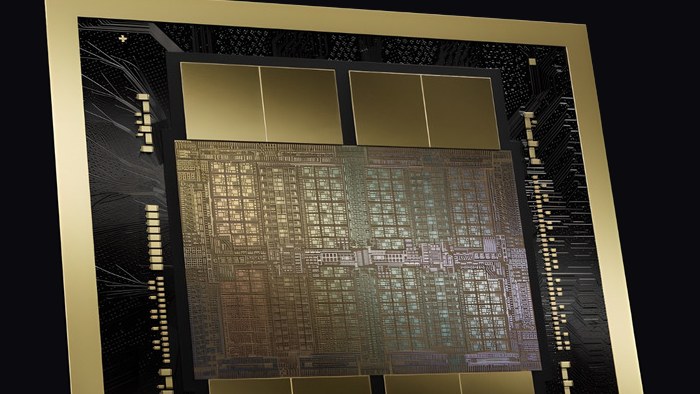
The detail that makes these boxes useful is how they handle memory. A normal gaming graphics card has its own small, fast memory, often 16 or 24 gigabytes, and an AI model that does not fit in that space simply will not load. The GB10 instead gives the chip and the AI model one shared pool of 128 gigabytes, far more room than a consumer card offers. Anything that fits in that pool will load and run, which is the entire reason to buy one of these instead of a regular card.
There is a ceiling, though, and it is the number that quietly governs everything: how fast the machine can read its own memory. An AI model generates text one word at a time, and to produce each word it has to read the whole model out of memory again. The speed of the machine is really the speed of that reading, and on the GB10 that reading speed is fixed. It is generous enough for serious work but not blistering. A big model produces text at roughly the pace you read, not the pace you type. That is fine for jobs you set running and come back to, and it is exactly the same on both boxes because the memory is the same on both boxes.
Why they finish in a dead heat
This is worth saying plainly, because the marketing around both machines invites you to look for a winner. There is no winner on speed. The chip is the same, the memory is the same, and the reading speed that sets the pace is the same. Run the same model on both and the words come out at the same rate, close enough that you would need measuring tools to tell them apart.
So any review that ranks one above the other on performance is measuring noise. The honest comparison starts where the hardware stops being different, and that means three things the chip has nothing to do with: what you pay, what you can upgrade yourself, and what kind of support stands behind it. If your models are small enough to fit a normal graphics card, by the way, neither of these is the right buy; a discrete card will run circles around both, and our comparison of the DGX Spark against an RTX 5090 lays out where that line falls.
Price: the ASUS is the cheaper way in
Both boxes have climbed in price over their first year, because the type of memory they use went into short supply across the whole industry. The exact figures will keep moving, so treat them as a snapshot rather than a fixed truth. As of mid-2026, the ASUS box lists for roughly a thousand dollars less than the NVIDIA one for the same starting storage, and that gap has been the steadier part of the story even as both numbers drifted up.
The point that survives the price swings is the structure of the deal. You are paying NVIDIA’s premium for a box that is no faster than the cheaper one. For most individuals and small teams, that premium is hard to justify, because the workload cannot tell the two apart. The money you save on the ASUS box is real and spends like any other money, on a bigger drive, on cloud credits, or on the next machine.
Storage: the one difference you can act on
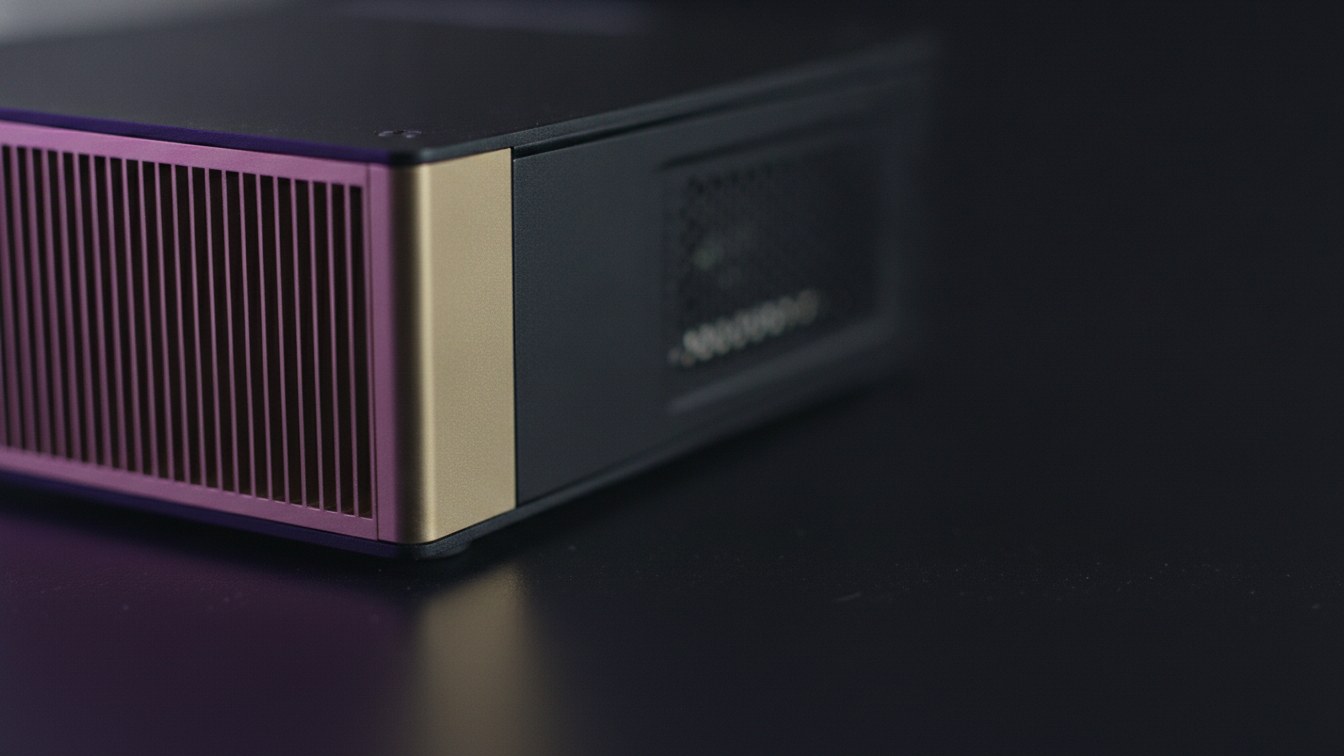
Here is the only hardware difference that genuinely changes how you live with the machine. The ASUS box lets you open it and replace the storage drive yourself, the way you would in a desktop PC. The NVIDIA box fixes the storage at the moment you buy it; whatever capacity you choose is the capacity you keep.
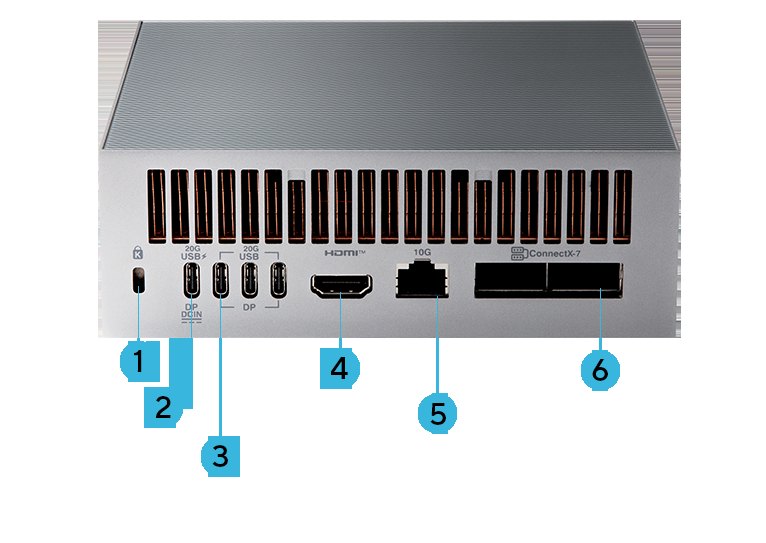
This matters more than it sounds, because AI files are enormous and a drive fills up fast. A single large model is tens of gigabytes, and you rarely keep just one; you keep a few versions of it, plus the data you are working with. A drive that looked roomy on day one is full by the end of a busy week. With the ASUS box you can start small, see how much room you actually need, and buy more storage only when you hit the wall. With the NVIDIA box you have to guess your future needs up front and pay for them on the spot.
There is one catch worth knowing before you assume any drive will fit: the ASUS box uses a shorter, less common size of drive than the standard desktop part, so your options are a little narrower and a little pricier per gigabyte. ASUS will also sell you the box with a larger drive already fitted if you would rather not open it at all. Either way, the ability to upgrade later is a real advantage the NVIDIA box does not offer. The NVIDIA box does ship a slightly faster drive as standard, which loads models a touch quicker from cold, but that affects how long you wait at startup, not how fast the model then runs.
Support: who picks up the phone
The last difference is not hardware at all; it is the company behind the box. ASUS sells the GX10 as an ordinary ASUS product, with the same consumer warranty and return process as any of its other machines. For one person or a small team, that is a familiar, perfectly adequate arrangement.

NVIDIA sells the DGX Spark with its own enterprise support and software path wrapped around it. For a research lab that already runs NVIDIA’s larger systems and wants every machine, desk to data center, backed by one vendor under a formal support contract, that single line of accountability has real value. It is a purchasing argument, not a performance one. You are paying for the name on the support contract, not for anything the AI model will ever notice. If you would happily be your own warranty department, you are paying for something you do not need.
If your plan is to pair one of these with a serious search-and-retrieval setup so the model can answer from your own documents, our guide to the best vector databases in 2026 covers what to run alongside it, and our practical guide to fine-tuning a model walks through the kind of training these boxes are built for.
Which one to buy
Because the speed is a tie, the recommendation comes down to who you are.

If you are an individual or a small team, buy the ASUS Ascent GX10. You get the identical chip and the identical speed for clearly less money, and you can upgrade the storage yourself when you outgrow it. For the large majority of people putting a big model on a desk, that is the sensible choice with no performance penalty attached.
If you are an enterprise lab standardized on NVIDIA’s systems, the DGX Spark earns its premium, not on speed but on the single-vendor support and software path that a procurement team can rely on. That is the one scenario where the extra money is doing real work.
If your models are small, skip both. These boxes exist for the large models that will not fit a normal graphics card. For anything that does fit one, a discrete card is both faster and cheaper, and neither of these machines is the right tool.
The short version
These two machines run the same chip at the same speed, so this was never a contest of performance. The ASUS Ascent GX10 delivers the DGX Spark’s exact output for around a thousand dollars less and lets you upgrade your own storage afterward. The DGX Spark earns its premium only when you need NVIDIA’s enterprise support and single-vendor software path, which is a purchasing requirement, not a speed advantage. Match the machine to the model and the support you genuinely need, and the choice makes itself.
Frequently asked questions
Is the ASUS Ascent GX10 cheaper than the DGX Spark?
Yes. For the same starting storage, the ASUS box has consistently listed for around a thousand dollars less. Both prices have risen over time because of a memory shortage, so the exact figures move, but the ASUS box has stayed the cheaper of the two while delivering the same speed.
Do the two machines run at the same speed?
Effectively yes. They use the same chip and the same memory, and that memory is the part that sets the pace for running AI models. Run the same model on both and you would need measuring tools to tell them apart. The only practical edge the NVIDIA box holds is a slightly faster drive that loads a model a little quicker from cold, which does not change how fast the model then works.
Can you upgrade the storage on the GX10 yourself?
Yes, and this is its standout advantage. You can open the ASUS box and swap the drive for a bigger one later, so you buy more storage only when you actually need it. The one caveat is that it takes a shorter, less common size of drive than a standard desktop part, so check compatibility before you buy. The DGX Spark, by contrast, locks in its storage at purchase.
What size of AI model can these actually run?
Anything that fits in the shared pool of 128 gigabytes of memory, which covers the large models that a normal graphics card cannot load at all. That memory pool, not the storage drive, is the real ceiling on model size. A bigger drive just lets you keep more models on hand; it does nothing for how large a model you can run.
Should I buy one at all?
Only if the models you want to run are too big for a normal graphics card. These boxes are built for large models and run them at a steady, work-it-overnight pace rather than an instant one. If your models are small enough to fit an ordinary card, buy the card instead; it will be faster and cheaper for that job.