Synology NAS Open Source Alternatives: What Control Actually Means
Looking for a Synology NAS open source alternative? The real question isn't features, it's who controls your hardware and software long-term.
Synology NAS Open Source Alternatives: What Control Actually Means
A Synology NAS is a small box that sits on a shelf and stores your files, photos, and backups so you don’t have to trust them entirely to a cloud provider. It’s popular because it’s easy to set up. But that ease comes from a trade: Synology’s operating system, called DSM, only runs on Synology’s own hardware, and only Synology decides what it does next. A Synology NAS open source alternative is usually what someone starts looking for after that trade stops feeling worth it, and rarely because they wanted a longer spec sheet. They’re reacting to a moment: a discontinued model, a subscription fee that appeared where there wasn’t one, or just the discomfort of not being able to open the hood on a machine holding their family photos.
That reaction points at something more durable than any single product comparison. The question worth answering isn’t “which box has more bays” or “which app store looks nicer.” It’s who is actually in control of the machine you paid for, and what happens years from now when the vendor changes its mind.
Why “alternative” really means control, not features
Synology sells a sealed unit: you buy the hardware and the software together, and DSM is licensed to run only on Synology’s boards. If Synology discontinues a model, stops patching it, or changes what a feature costs, there’s no legal path to keep running that software on different hardware, and no way to inspect what the software is actually doing with your data. That’s not a criticism of build quality, which is generally solid. It’s a description of a closed loop: one company controls the hardware roadmap, the software roadmap, and the upgrade path, all at once.
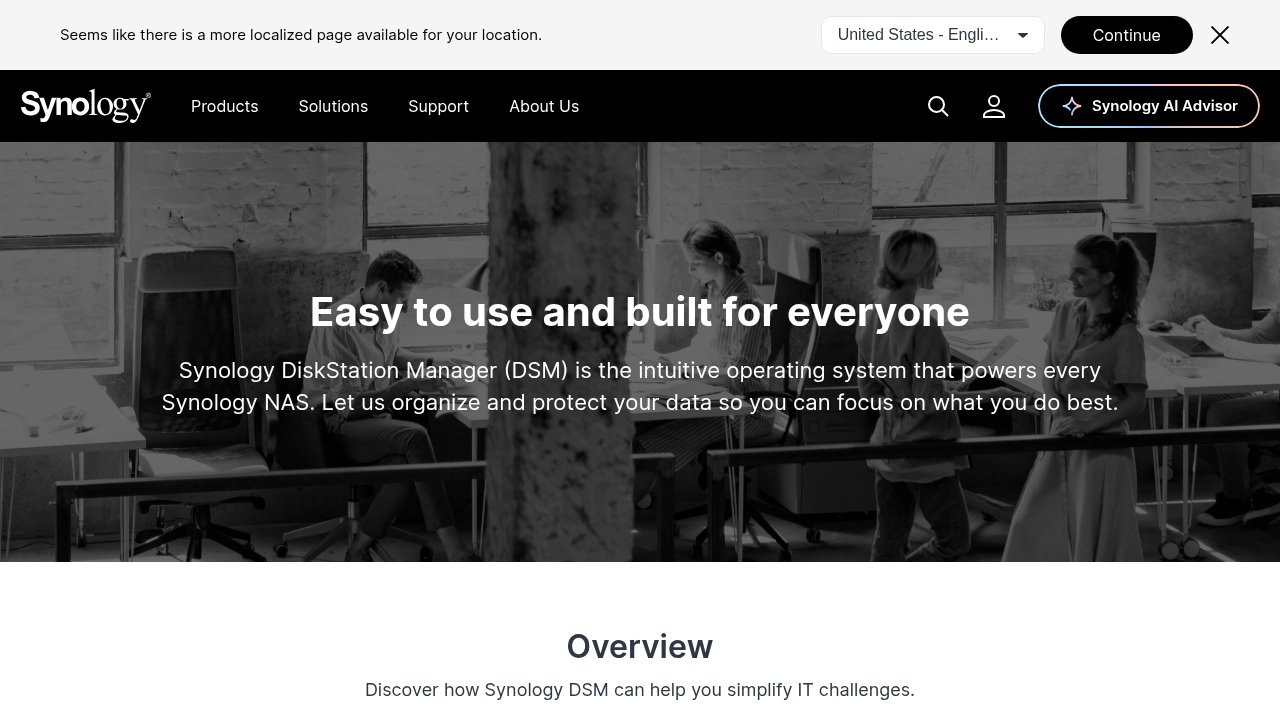 Synology DSM — the operating system stays tied to Synology’s own hardware.
Open source software flips that loop open. The source code, the actual instructions the computer runs, is published and licensed so that anyone can read it, modify it, and run it on hardware the vendor never approved or even imagined. Practically, for a NAS, that means three things a reader can actually use: you can build or repurpose your own machine instead of buying a sealed appliance, you can verify what the software does instead of taking a vendor’s word for it, and if the original developer ever disappears or changes direction, someone else can keep the project alive because the code isn’t locked in a vault.
None of this is an argument that Synology is bad. For a reader who wants a NAS that works out of the box and never wants to think about it again, DSM’s polish is a real advantage, not a flaw to be argued away. The alternative case is for a specific reader: someone who wants that control back, even at the cost of a bit more setup work.
TrueNAS SCALE: the open source option built for control
TrueNAS, made by a company called iXsystems, is genuinely open source, licensed under open terms that let anyone inspect and redistribute the code. For years it existed as two separate products: TrueNAS CORE, built on a Unix-like foundation called FreeBSD, and TrueNAS SCALE, built on Linux. iXsystems has since folded its development effort into SCALE. CORE reached its final release in spring 2025 — 13.3-U1.2, shipped April 29, 2025 — and now only receives maintenance and security patches, no new features. SCALE is the version under active development, the one iXsystems recommends going forward. Anyone comparing the two today should treat SCALE as the current answer, not one option among two live tracks.
What that means for a reader coming from Synology: TrueNAS SCALE runs on ordinary PC hardware, old workstations, purpose-built NAS boards, or even a spare desktop, rather than a single vendor’s sealed case. It’s built for people who want the file-storage and backup features Synology users are used to, plus the ability to run additional services alongside them, without a single company deciding what the box is allowed to do. The trade-off is real: getting there takes more comfort with configuration than plugging in a Synology box and clicking through a wizard. TrueNAS SCALE rewards someone willing to spend an afternoon setting it up once, in exchange for years of not depending on one vendor’s roadmap.
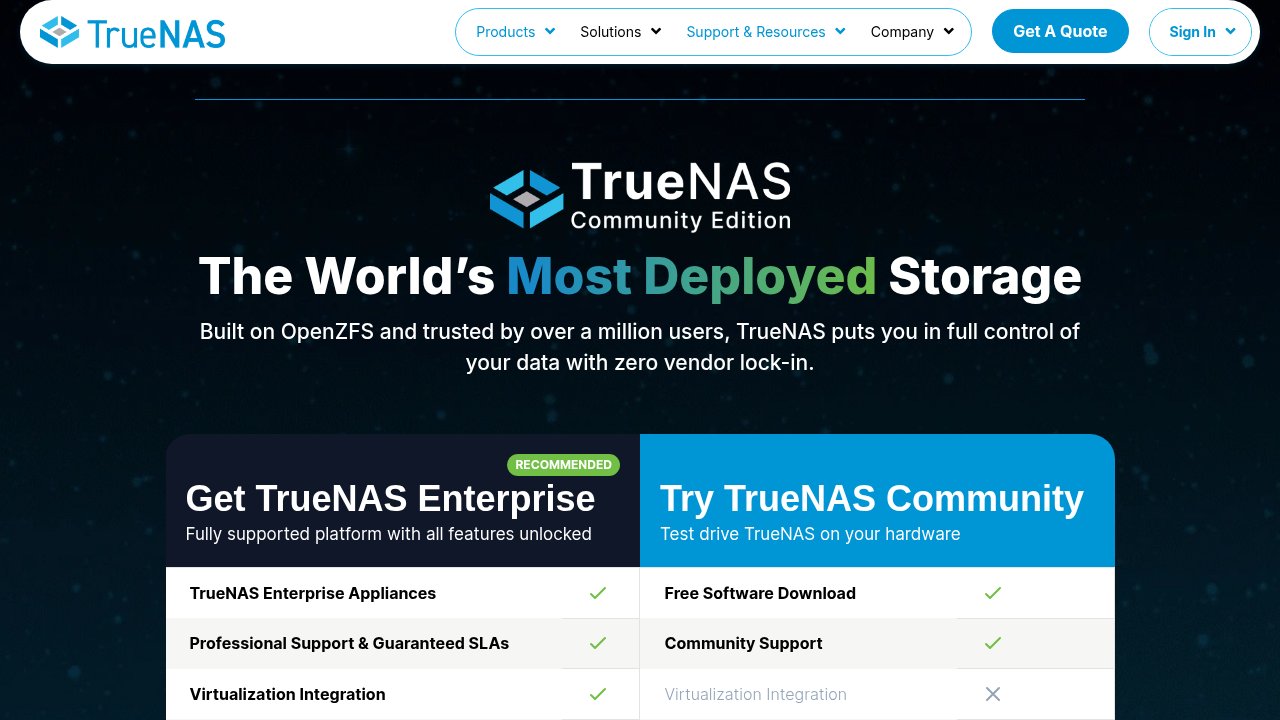 TrueNAS SCALE — the actively developed, Linux-based track iXsystems now recommends.
OpenMediaVault: the lighter open source option
OpenMediaVault, usually shortened to OMV, is the other genuinely open source option worth naming, licensed under terms that keep it fully open (GPLv3, a license that requires any modified version to stay open too). It’s built on Debian, a widely used Linux foundation, and it’s deliberately lighter than TrueNAS SCALE: it asks less of the hardware underneath it, which makes it a realistic fit for older, lower-power machines that would struggle to run TrueNAS SCALE comfortably.
 OpenMediaVault — a Debian-based NAS OS built to ask less of the hardware underneath it.
The practical difference between the two isn’t openness, both are open source with active maintainers, it’s scale and ambition. OMV is a good match for someone repurposing an old laptop or a low-power mini PC into simple file storage and backups. TrueNAS SCALE is the better fit for someone who wants that plus room to run more demanding services on the same box. Neither is objectively “better”; they’re sized for different hardware and different appetites for complexity.
Unraid looks like an alternative, but it isn’t open source
Here is where most “Synology alternative” roundups quietly get something wrong, and it matters for exactly the reader this article is for. Unraid, made by a company called Lime Technology, shows up constantly in these comparisons because it also lets you build your own NAS on hardware you choose yourself, mixing and matching drives in ways Synology doesn’t allow. That freedom from vendor-locked hardware is genuine.
But Unraid is not open source software. It’s a proprietary, closed-source operating system sold under a one-time paid license. That license has traditionally been tied to a physical USB key that has to be present for the system to boot; since version 7.3 (May 2026), Unraid can also anchor the license to the motherboard via TPM and boot from internal storage, so a physical USB key is no longer strictly required. You cannot read its full source code, and you cannot legally redistribute or fork it the way you can with TrueNAS SCALE or OpenMediaVault. Some individual pieces inside Unraid, like the Linux kernel it runs on and certain filesystem components, are open source because Unraid is built on top of them, but the operating system as a whole, the product Lime Technology sells, is not.
That distinction matters specifically because of what “alternative” is doing in a search like this one. If someone wants freedom from Synology’s specific hardware, Unraid genuinely offers that. If someone wants the ability to inspect, modify, or independently maintain the software itself, the two are not the same freedom, and Unraid doesn’t offer the second one. Getting this backwards is the most common mistake in this whole category of comparison, and it’s worth flagging plainly rather than letting Unraid slide into a list where it doesn’t belong.
 Unraid — hardware freedom, but a paid, closed-source operating system.
Comparing the control model, not the spec sheet
Prices, exact version numbers, and app-store catalogs change constantly and tell a reader little that will still be true next year. What doesn’t change as quickly is who holds the keys. Here’s how the main options line up on that axis:
| Synology DSM | TrueNAS SCALE | OpenMediaVault | Unraid | |
|---|---|---|---|---|
| Source code open | No | Yes | Yes | No (some components only) |
| Runs on your own hardware | No, Synology hardware only | Yes | Yes | Yes |
| Vendor can end support unilaterally | Yes | No single vendor to do so | No single vendor to do so | Yes |
| Setup effort vs. Synology | Lowest | Higher | Moderate | Moderate |
| Best fit | Wants it to just work | Wants control and room to grow | Wants control on modest hardware | Wants hardware freedom, doesn’t mind closed software |
The table isn’t a scorecard with a winner circled at the bottom. It’s a way of seeing that “alternative” splits into two different questions that get conflated constantly: freedom from a specific vendor’s hardware, and freedom to inspect and control the software itself. TrueNAS SCALE and OpenMediaVault answer both. Unraid answers only the first.
What actually changes if you switch
Switching away from a sealed vendor NAS doesn’t just change what logo is on the box, it changes what happens over time. With Synology, the company sets the pace: when a model is discontinued, when a feature moves behind a subscription, when an app is deprecated. With an open source system like TrueNAS SCALE or OpenMediaVault, that decision-making moves to the reader and, for the parts they don’t want to manage themselves, to an open community rather than a single company’s product roadmap. If the maintaining organization changed direction tomorrow, the code would still exist, still be legally forkable, and other developers could keep it going. That continuity guarantee is the actual, durable thing an open source alternative buys, not a longer feature list.
The honest cost sits on the other side: more of the responsibility for backups, updates, and troubleshooting lands on the reader, not a vendor support line. That’s a fair trade for someone who wanted control in the first place. It’s a worse trade for someone who just wanted a box that works and never wants to think about it again, and for that reader, sticking with a sealed vendor system isn’t a mistake, it’s a reasonable choice for a different set of priorities.

Frequently asked questions
Is TrueNAS actually free to use?
TrueNAS SCALE, the actively developed version made by iXsystems, is free and open source software that anyone can download, install, and modify. iXsystems also sells pre-built hardware appliances running TrueNAS for people who don’t want to assemble their own machine, but running the software itself on your own hardware costs nothing.
Why is Unraid included in so many “open source alternative” lists if it isn’t open source?
Unraid gets grouped with open source NAS options because it shares one real trait with them: it lets you build your own server on hardware you pick, instead of buying a sealed vendor appliance. That’s a genuine similarity. But the operating system itself is proprietary and sold under a paid license, which is a separate question from whether you can pick your own hardware.
Can I move my files from a Synology NAS to TrueNAS SCALE or OpenMediaVault?
Moving files off a Synology NAS to TrueNAS SCALE or OpenMediaVault works in the general sense that both systems read standard file formats and standard network protocols, so files copied off a Synology box can be copied onto either system. There’s no automated one-click migration tool built by Synology for this, since Synology has no reason to make leaving its ecosystem easy, so the move is a manual file transfer rather than an in-place conversion.
Do I need special hardware to run TrueNAS SCALE or OpenMediaVault?
No dedicated NAS hardware is required to run TrueNAS SCALE or OpenMediaVault. Both systems run on ordinary PC components: a spare desktop, an old workstation, or a small purpose-built board, as long as it has enough storage bays or ports for the drives involved. TrueNAS SCALE generally wants more processing power and memory than OpenMediaVault, which is why OMV is the better fit for older or lower-power machines.
Is it harder to maintain an open source NAS than a Synology box?
Maintaining an open source NAS is generally harder than running a Synology box, at least at first. Synology’s DSM is built to minimize decisions: it configures much of itself and presents a polished interface for the rest. TrueNAS SCALE and OpenMediaVault expect the person running them to understand more about their own setup, in exchange for not depending on one vendor’s decisions about what the hardware and software are allowed to do over time.
The takeaway
The useful question behind “Synology NAS open source alternative” isn’t which box has better specs this year, it’s whether the reader wants a company to keep making decisions about their storage on their behalf, or wants to make those decisions themselves. TrueNAS SCALE and OpenMediaVault are the options that actually hand over that control, because their code is open and their software runs on hardware the reader chooses. Unraid hands over the hardware choice but not the software itself, which is a real difference worth knowing before it gets lumped in with the rest. Neither path is wrong. What matters is picking the one that matches why the reader went looking for an alternative in the first place.